About Us - Best IT Training Institute in Guduvanchery

Guiding your path to success

At Provigo Technologies, the leading training institute in Chennai, we believe that every learner has the potential to achieve greatness when guided with the right knowledge and mentorship. As the best software training in Guduvanchery, our mission is to empower students with practical skills through our Full-stack developer course Chennai, Java training with placement, Python training in Chennai, web development course in Chennai, UI/UX course Chennai.

  • Practical, Hands-On Learning

    We focus on real-world applications, ensuring every concept you learn can be applied in practical scenarios.

  • Expert Trainers with Industry Experience

    Learn directly from professionals who bring years of expertise and insights from the field.

  • Personalized Mentorship

    Small batch sizes and one-on-one guidance to ensure every learner gets the attention they deserve.

Clients

Projects

Hours Of Support

Workers

Services

We provide comprehensive career support services, including resume building, interview preparation, internship opportunities, and personalized mentorship to help you achieve your professional goals.

On Job Support

Our On-Job Support services are designed to help professionals overcome workplace challenges with confidence. Whether you are handling new projects, learning advanced tools, or facing technical issues, our experts provide step-by-step guidance and practical solutions. We ensure you succeed in your role while gaining valuable skills for career growth.

Internship Opportunities

We offer exciting internship opportunities for students and fresh graduates to gain hands-on experience in real-world projects. Our internships provide practical learning, mentorship from industry experts, and skill development that prepares you for a successful career. Join us to explore, learn, and build your future with confidence.

Resume Building

Resume building is a crucial step in shaping your career. A well-crafted resume highlights your skills, strengths, and achievements, making you stand out to employers. Our guidance helps you create professional, structured, and impactful resumes that reflect your true potential and increase your chances of securing opportunities.

Interview Preparation

Our Interview Preparation program equips candidates with the confidence and skills to excel in job interviews. We provide guidance on common questions, mock interviews, communication techniques, and presentation skills. With expert feedback and practical tips, we help you showcase your strengths effectively and succeed in securing your dream job.

Doubt-Solving Sessions

Our Doubt-Solving Sessions are designed to provide personalized support and clarity for every learner. Whether it’s technical concepts, project challenges, or subject-related queries, our experts offer step-by-step explanations and practical solutions. These sessions help students build confidence, strengthen understanding, and achieve better results through guided learning.

Career Guidance

Career guidance helps individuals choose the right path by identifying their strengths, interests, and goals. With expert mentoring and personalized advice, we support students and professionals in making informed decisions about education, skills, and careers. Our guidance ensures clarity, confidence, and a roadmap for long-term success.

Call To Action

Start Your Learning Journey Today!

Unlock your potential with our industry-focused training programs. Whether you’re starting fresh or upgrading your skills, our expert trainers, hands-on projects, and personalized mentorship will help you achieve your career goals.

New batches starting soon – don’t miss your chance!

Contact us now and take the first step towards your success.

Courses

"Explore our wide range of expertly designed courses to enhance your skills, advance your career, and fuel your passion for learning."

Course
Programming

JavaScript Course

Master advanced JavaScript concepts, from ES6+ features to async programming, and build dynamic web apps.

15 hours
View More
Course
Design

UI/UX Design Course

Learn the core principles of UI/UX design to create intuitive, user-friendly, and visually appealing digital experiences.

8 hours
View More
DotNet Course
Programming

DotNet Course

Learn .NET from the ground up, building robust, scalable, and high-performance applications with hands-on projects.

22 hours
View More
Machine Learning with Python
Programming

Python Course

Master Python programming and build real-world machine learning applications with ease.

35 hours
View More
Cloud Computing Course
Cloud Computing

Cloud Computing Course

Learn the essentials of Cloud Computing, including services, deployment models, and practical applications in the modern tech world.

12 hours
View More
Data Science Course
Programming

Data Science Course

Master the core concepts of Data Science, from data analysis and visualization to machine learning and real-world problem-solving.

18 hours
View More
Git Course
Version Control

Git Course

Learn the essentials of Git, from version control basics to advanced branching, merging, and collaboration workflows used in real-world projects.

10.5 hours
View More
Node.js Course
Programming

Node.js

Master server-side JavaScript with Node.js, covering asynchronous programming, event-driven architecture, and building fast, scalable applications from scratch.

42 hours
View More
Course
Programming

Azure Course

Learn cloud computing with Microsoft Azure, from deploying web apps and managing databases to implementing scalable, secure, and globally distributed solutions for modern businesses.

21 hours
View More
Course
Programming

ReactJs Course

Build dynamic and responsive user interfaces with React, a powerful JavaScript library for creating component-based, fast, and interactive web applications.

9.5 hours
View More
Course
Programming

AngularJs Course

Develop robust, scalable, and dynamic web applications with Angular, a TypeScript-based framework that offers powerful tools for building interactive, single-page applications with ease.

56 hours
View More
Course
Programming

MongoDB Course

Store, manage, and retrieve data efficiently with MongoDB, a flexible NoSQL database that uses a document-oriented approach for high performance, scalability, and ease of development.

17.5 hours
View More
Course
Programming

Web Design Course

Web design is the art and science of creating websites that are both attractive and easy to use. It involves planning layouts, choosing colors, fonts, and images, and ensuring that the site is responsive across different devices.

23 hours
View More
Course
Programming

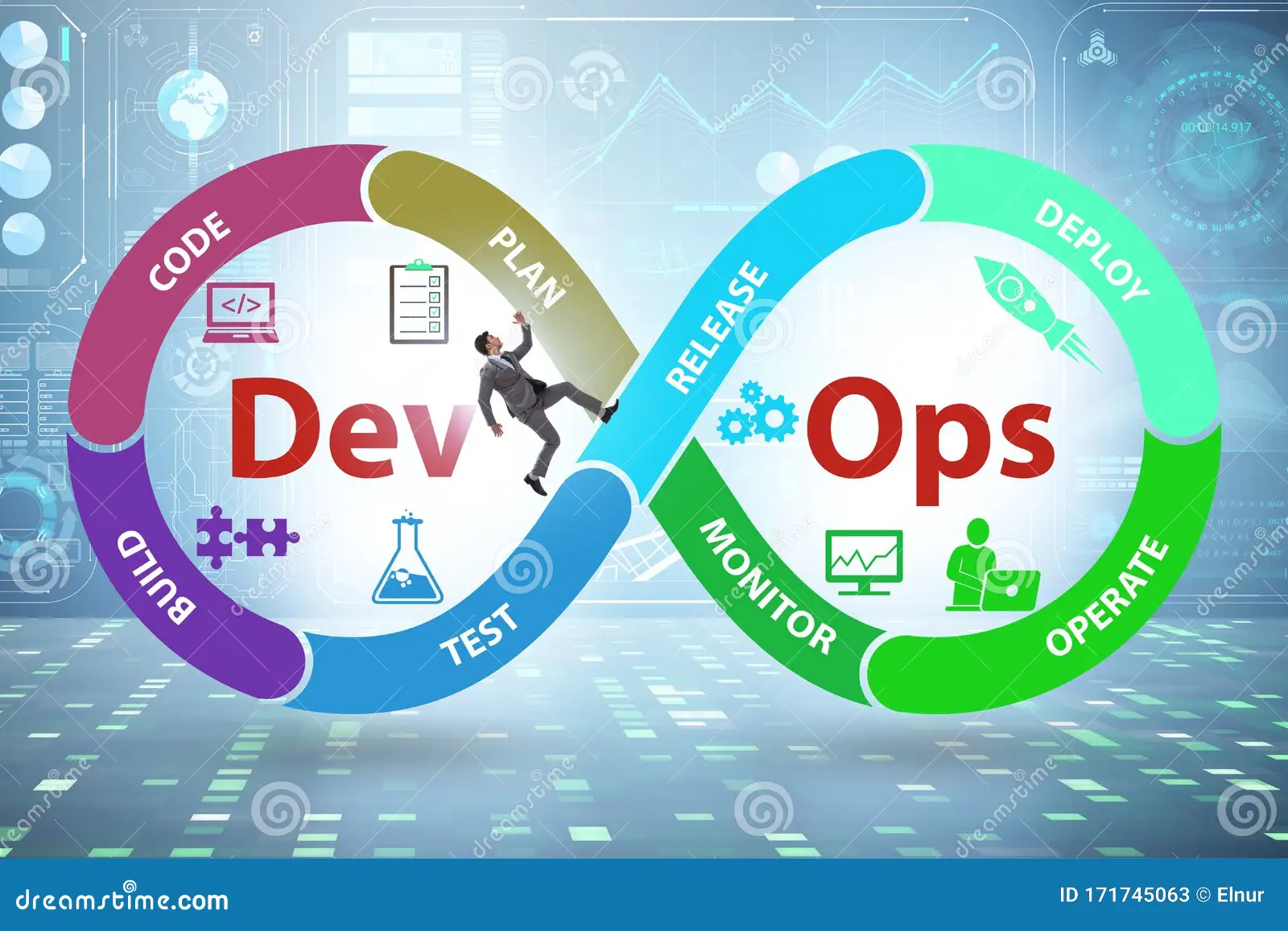
DevOps Course

Integrate development and operations practices to automate workflows, enhance collaboration, and deliver software efficiently using CI/CD, monitoring, and infrastructure as code.

56 hours
View More
Course
Programming

AWS Course

Leverage Amazon Web Services to build, deploy, and scale applications in the cloud with services for computing, storage, and security.

32 hours
View More
Course
Programming

Java Course

A versatile, object-oriented programming language used to build platform-independent applications, from enterprise solutions to mobile apps.

61.5 hours
View More
Course
Programming

C Course

A powerful, low-level programming language known for its speed, efficiency, and control over hardware.

25.5 hours
View More
Course
Programming

C++ Course

An extension of C that supports object-oriented, procedural, and generic programming.

48 hours
View More
SQL Database
Programming

SQL Course

A standard language for managing and manipulating relational databases.

12 hours
View More

On Job Support

Guiding your path to success

We provide continuous assistance even after your training ends, helping you excel in your workplace. Whether you’re facing technical challenges or need guidance on project tasks, our experts are here to support you.

What We Offer

  • Real-time problem solving

    Get help for issues you encounter at work

  • Code debugging & optimization

    Improve your code for better performance.

  • Project guidance

    Expert advice on your ongoing work assignments

  • Skill reinforcement

    Quick refreshers on course concepts when needed.

  • Flexible support hours

    Assistance as per your work schedule.

Internship Program

Lightening up your future from DARK

Our internship program is designed to bridge the gap between academic learning and real-world industry experience. Whether you’re a fresher or a career switcher, we provide you with hands-on training, live projects, and mentorship from industry professionals.

What You’ll Gain:

  • Practical Skills

    Apply your classroom knowledge to solve real business challenges.

  • Industry Exposure

    Work on live projects in your chosen domain.

  • Mentorship

    Receive guidance from experts to sharpen your skills.

  • Certification

    Gain a recognized certificate to boost your career profile.

  • Career Guidance

    Get tips and advice to prepare for your job interviews.

Coding for Kids

Fun, hands-on coding classes that build logic, creativity, and problem-solving— designed for young minds and absolute beginners.

Ages 7–9 Ages 10–12 Ages 13–16
  • Create games with block coding (Scratch)
  • Start programming with Python & JavaScript
  • Design simple websites with HTML & CSS
  • Learn logic, algorithms & problem-solving
  • Build teamwork with fun mini-projects
  • Earn certificates & showcase projects
Live online & in-person batches
90-min classes · 2x/week
Starter kit & worksheets
Doubt-clearing support
Kids Coding Class
Starter (7–9)

Scratch games, animations, basic logic.

Explorer (10–12)

Scratch → Python, web basics, puzzles.

Creator (13–16)

Python/JS apps, HTML/CSS, algorithms.

Capstone

Build & present a project portfolio.

Interview Questions & Answers

Prepare with real interview questions from top companies — click to reveal answers.

The benefits of serverless computing include cost savings, automatic scaling, and reduced management overhead since the cloud provider manages the infrastructure. It allows developers to focus on code rather than maintaining servers wholly. The disadvantages include the chance for vendor lock-in, limited control over infrastructure, and latency issues. For some use cases and workload requirements, it will all depend on serverless

The most essential Cloud Service models are IaaS, PaaS, and SaaS. IaaS is the capability provided to the consumer to provision processing power over the Internet. It gives the client control over the infrastructure components, including storage and networking. PaaS provides platforms where developers build applications without managing the underlying infrastructure. SaaS delivers fully functional software applications over the web.

Data security in cloud computing involves encryption, identity and access management (IAM), and multifactor authentication (MFA). Encryption means securing data both in transit and at rest. Proper IAM policies ensure that only the right user can access the specific resources. Conduct of routine audits in terms of security standards like GDPR or HIPAA will help maintain the cloud’s security.

Microsoft Azure is essential in digital transformation because of its extensive portfolio of cloud services, including AI, IoT, and data analytics. These cloud services help organizations modernize their infrastructure, improve the efficiency of the operation process, and introduce new business models possibly pegged on an organization’s dependence on the cloud. Azure ensures support for hybrid cloud environments so that companies can transition and work comfortably from an on-premises setting to the cloud

  • Migrating an on-premises system to the cloud includes two assessment, planning, and execution stages.
  • First, analyze the current infrastructure and determine which applications suit such migration
  • Then, choose a suitable cloud provider and the appropriate service model or architecture, IaaS, PaaS, or SaaS, based on business needs.
  • One could either lift and shift or refactor the application for cloud optimization.

  • Cloud elasticity, or the automatic scaling of resources up and down with demand on cloud services, allows organizations to use only necessary resources
  • At a given point in time since more servers may be provisioned at points of peak traffic and decommissioned during periods of low usage.
  • Elasticity is indeed one of the major advantages of cloud computing, ensuring that systems are responsive and cost-efficient at the same time.

  • AWS is generally the largest cloud provider, offering a huge range of services and considered one of the most mature in terms of infrastructure.
  • With a global reach, Azure is tightly integrated with Microsoft products and is often preferred by organizations already using some of Microsoft’s technologies.
  • Google Cloud Platform is especially strong in data analytics and machine learning services, so it is best suited for big data applications.
  • Relatedly, pricing, service availability, and specific toolsets vary between the platforms. Therefore, they are suited to different types of businesses.

It supports multi-cloud infrastructure with major cloud providers, including AWS, Azure, and Google Cloud. This allows businesses to use SAP solutions in several environments and still keep them in an interoperable network. SAP BTP has capabilities for integrating data and applications. It makes creating services from cloud-native services from other providers easier, and it comes with tools to develop and extend SAP applications for hybrid.

Load balancing distributes incoming traffic across multiple servers, avoiding overload on any single server. This improves system performance and availability. In a cloud environment, it helps smooth out variable workloads and avoid bottlenecks, which means a better overall user experience. Redundancy also means that if one server fails, a suitable alternative can redirect traffic to improve the system’s reliability.

ETL in data management refers to moving data from a source system to a data warehouse or a data lake. The first step in ETL is called “extract.” It collects raw data from several sources, including databases, APIs, or flat files. This “transformation” process cleans, filters, and modifies the data into the proper format or structure. This step uploads the transformed data into the target system for storage and analytics. This is what ensures that the business intelligence database is integrated and structured.

  • Developing a data warehouse architecture involves the identification of sources of data, determination of ETL processes, and layers for storage and reporting
  • The architecture typically consists of three layers: a staging area where raw data is uploaded for preliminary processing, a data warehouse where cleaned and transformed data is stored.
  • The data is usually encapsulated in star or snowflake schemas comprising fact and dimension tables. There are always some critical considerations about consistency, scalability, and security in the design process.

  • This approach to data analysis allows for fast data analysis from multiple angles through complex querying.
  • OLAP systems structure data in multidimensional cubes to be sliced and diced along various dimensions for time, place, or product.
  • Applications Common business intelligence usage includes reporting, forecasting, and making decisions.
  • OLAP enables activities such as trend analysis, financial reporting, and market analysis with rapid query response in an interactive manner

  • Structured data is already prearranged for a predefined structure, like rows and columns in a relational database.
  • Unstructured data needs to be more defined and contain various content, such as text, images, videos, and social media posts.
  • Although processing structured data has become streamlined with tools normally developed for just such a purpose.
  • It often requires advanced techniques specifically for NLP and ML for unstructured data.

Data quality and consistency require data governance policies, the implementation of validation rules and processes automating such practices. Therefore, data should be cleansed, standardized, and audited regularly to detect any duplicates duplicates or inaccuracies. The use of MDM (Master Data Management) systems ensures that critical data has uniformity through centralizing it. The synchronizing data across various systems achieves uniformity through ETLs or retreat integrations.

Best Practices for data governance are role and responsibility definition, data stewardship, and setting standards for data quality. A good governance framework should also define policies on data privacy, security, and compliance with regulations such as GDPR. Classification and labelling for sensitive data need to be uniform. Regular audits and reviews ensure policies are implemented while maintaining an open stakeholder relationship helps hold individuals accountable.

A data lake is an integrated reservoir that stores raw data in its natural form, either structured, semistructured, or unstructured. Unlike the traditional data warehouse, which needs transformation before actual storage, data lakes support flexible ingestion. That makes them very good for big data analytics since they can hold large volumes of different types of data. Data lakes are popular among users for machine learning, realtime analytics, and advanced exploration.

  • Big data processing requires distributed computing frameworks such as Hadoop or Apache Spark, in which the data is processed parallelly across several nodes.
  • Storage frameworks typically include technologies like HDFS (Hadoop Distributed File System) or even cloud-based solutions such as AWS S3 or Azure Data Lake.
  • Processing frameworks allow for batch processing, stream processing, and machine learning. Compression of the data, along with proper partitioning, optimizes storage efficiency and query performance.

Hadoop is an open-source framework for distributed handling large data sets, using HDFS and MapReduce. Now, if you have any experience in Hadoop, then you must hear about Spark, which is a kind of complementary set of technologies that offers in-memory processing, which makes it. The use of these technologies makes it faster for iterative machine learning tasks as well as realtime analytics. My experience with such technologies includes:
  • Setting up clusters.
  • Writing jobs in MapReduce.
  • Optimizing Spark workloads in ETL and big data analysis.

  • SQL Server Reporting Services is a reporting tool for producing reports which can be presented as PDF, with Excel files, or through web-based views.
  • This enables it to produce highly detailed, interactive reports from structured data sources like SQL databases. SSRS can be applied for both ad-hoc and enterprise-level reports.
  • In this regard, it is an indispensable tool in presenting all manner of information throughout an organization, and the scheduling capability of the reports enhances its utility in decision-making.

A microservices architecture breaks down software applications into smaller, independently deployable services, and each service could be responsible for a specific business function. This way, we develop, test, and deploy one service without interfering with others. Implementation entails the development of concrete services, interservice communication, usually through RESTful APIs, and managing it using tools such as Docker for containerization and Kubernetes for orchestration.

In a monolithic architecture, all components of an application form one single codebase, which makes updating or scaling particular components extremely tough without impacting the whole system. With microservices, an application is broken down into loosely coupled, independent services that make scalability and deployment easier. While it may be easier to start developing monoliths, microservices provide higher fault tolerance than their counterparts since errors occurring within one service do not necessarily propagate to others.

Fault tolerance for a distributed system is achieved through redundancy, replication, and graceful degradation techniques. Databases and services are examples of redundant components, meaning the system can still function if one piece fails. Data distribution across nodes or regions allows continued availability in hardware failure and network failure cases. Monitoring and proactive errordetection mechanisms also reduce the potential faults before it reaches the users.

  • The behaviour is consistent across environments, simplifying deployment and reducing conflicts between software versions.
  • Kubernetes, is an orchestration system that automatically manages and coordinates containers to scale them up and down.
  • It does so through load balancing service discovery and self-healing, ensuring the containers are always running.
  • Together, Docker and Kubernetes make the development cycle faster with reduced scalability, hence supporting microservices architectures.

Scalability in a cloud-based application is the ability of the system to handle increasing loads by adding resources. It would then grow in the direction of more instances of services, which are usually used in cloud environments. Load balancers distribute traffic uniformly among many cases so that no single service becomes a bottleneck. The autoscaling of resources, as offered by AWS or Azure, regulates itself according to the traffic.

  • Design patterns represent reusable solutions to common problems in software design.
  • They give best practices on structuring code to solve recurring challenges in software development.
  • Design patterns help ensure good organization, maintainability, and flexibility by providing tested solutions to problems.

  • A class should have only one reason to change.
  • Classes should be open to extension but closed to modification.
  • Subtypes must be substitutable for their base types.
  • Clients must not be forced to depend upon interfaces they do not use.
  • High-level modules should be independent of low-level modules. Both should depend on abstractions

Service-oriented architecture (SOA) is an approach to design in which software components are structured as independent, reusable services communicating over a network. Each such service isolates a single business function and is loosely coupled, thus providing flexibility, scalability, and straightforward integration of new services. SOA promotes interoperability, enabling different services to work together, often in different languages or platforms.

Semantic versioning is commonly used. The MAJOR version changes with the involvement of major functionality, the MINOR version changes to denote new features without breaking backward compatibility, and the PATCH version increments with each bug fix. Dependency management implies software components such as libraries and frameworks, including maintaining their updates and compatibility.

Building RESTful APIs relies heavily on key principles. Among others, each API call’s statelessness contains all the necessary information to conduct the processing and resource-based design, where every resource following, like a user or order, obtains a unique URL. Proper use of HTTP methods is vital for performing CRUD operations. API securityincluding authentication and authorization such as OAuth 2.0is crucial in protecting sensitive data.

A robust cyber security strategy offers multidimensional defences with preventive and reactive methodologies. Some important components include robust access controls through multifactor authentication and access based on roles so that only the right to access restricted data is extended to authorized users. Security audits, vulnerability assessments, and penetration testing identify weaknesses that must be attended to immediately.

  • Organizations use a multilayered defence approach to prevent data breaches, including firewalls, encryption, intrusion detection systems, and access controls.
  • Workers must be made aware of phishing attacks and security best practices. If the software is regularly updated and patched, this will eliminate the known vulnerabilities.
  • Acting speedily after the breach is again crucial, as this should initially be done by containing damage and then disconnecting affected systems to allow for its investigation.

  • It ensures that data is secure because ciphertext will be unintelligible with an incorrect key.
  • This ensures confidentiality and security are not overstepped. Encryption applies when data is transferred, stored, or transmitted over networks, especially with sensitive information.
  • It ensures that even if an unauthorized party accesses the data, they cannot read it without the decryption key, thus significantly reducing breaches.

  • Symmetric encryption makes use of the same decrypting and encrypting key.
  • Asymmetric encryption, by contrast, uses two keys: one public key to encrypt data and a private key to decrypt
  • Asymmetric encryption is widely applied in securing communication channels, such as SSL/TLS

IAM policies enforce the principle of least privilege to ensure secure access to cloud resources, ensuring that nobody has access to any more than is strictly necessary. Multifactor authentication provides an added layer of security, making unauthorized access much harder. Role-based access control (RBAC) and data encryption at rest and in transit further enhance security, with secure API gateways also being used to control access to cloud services.

Multifactor authentication refers to a type of security control that offers any three types of verification factors involved in the user’s authenticating method when accessing a system or resource. It typically requires something the user is aware of (like a password), something they have (like a one-time code on a mobile device), and something they are (such as biometrics from their fingerprint). This ensures that unauthorized users’ access risks are reduced even in cases where the password might have been compromised.

Due diligence should also be done on third-party software or vendors in terms of security before engaging with them. This includes their security policies and compliance with specific regulation standards such as ISO 27001, SOC 2, which applies to GDPR. It should also ensure that its practice with respect to handling data is safe, making sure it uses encryption and access controls. They also perform vulnerability assessments, penetration testing, and studying past incidents or breaches

  • A penetration test is a proactive approach to identifying security vulnerabilities before attackers can exploit them.
  • It simulates real-world attacks on a system or network to help organizations understand how their defences will hold up under actual threat conditions.
  • The results give valuable insights into weaknesses in infrastructure, applications, or policies and help organizations strengthen their security posture.
  • Security measures must prove effective and up to date with evolving threats through regular penetration testing.

  • A zero-trust security model is one based on the “never trust, always verify” principle, where no user or system inside or outside the network should be trusted automatically.
  • All-access requests must be authenticated, authorized, and continually validated based on user identity, device, location, and other risk factors.
  • This approach reduces the potential for internal threats, lateral movement within the network, and unauthorized access.

Implementing security in a DevOps pipeline is generally known as DevSecOps. DevSecOps places the integration of security practices throughout all stages of the software development lifecycle. Third, automated security testing becomes part of CI/CD pipelines; therefore, vulnerabilities are caught much earlier in the development cycle. Code scanning tools identify known security flaws and infrastructure as code templates are examined for misconfigurations.

  • Finance (FI): This module in finance is about financial accounting and reporting.
  • Controlling (CO): This is a module of managerial accounting that presents cost centre accounting.
  • Materials Management (MM): This module allows you to manage inventories, procurement, and material planning.
  • Sales and Distribution (SD): It consists of ordering management, pricing, and billing modules.
  • PP (production planning): Manufacturing processes and capacity planning.
  • PM (plant maintenance): Machines’ maintenance and inspection.
  • HCM (human capital management): Employee details and payroll.

SAP Fiori is a modern, userfriendly user interface across devices. It simplifies complex transactions in role-based apps with consistent design and responsive performance. Its UI-centric design brings more productivity, easier navigation, and higher user adoption than old SAP GUIs. By prioritizing user experience, Fiori empowers organizations to enhance operational efficiency and improve overall employee satisfaction.

  • It processes data much faster than traditional disks; data is kept in memory instead of disk.
  • Efficiently manages analytical queries, resulting in faster data retrieval.
  • Enables the completion of live processing and analysis of large data sets, which can lead to quicker decisionmaking.

  • Understanding the business processes and system requirements.
  • Identification of necessary integration points, tools, and APIs.
  • Definition of data flows from one system to another with field mapping and transformation rules.
  • Utilization of tools like SAP PI/PO, CPI or even third-party integration platforms between SAP and external system
  • Ensuring that the integrated systems work fine by unit, integration, and user acceptance testing
  • Monitoring is continued beyond integration to ensure stability and stability of systems.

ECC could run on any database, whereas S/4HANA only on SAP HANA. ECC runs on SAP GUI, whereas S/4HANA is on SAP Fiori. S/4HANA simplifies business processes because it eliminates redundancies, provides realtime real-time analytics, and reduces a firm’s data footprint. Its in-memory architecture leads to quicker data processing and transaction execution. S/4HANA has innovations like embedded analytics, predictive capabilities, and better integration with cloud services.

SAP Business Technology Platform is one platform to develop, integrate and extend applications. SAP BTP supports enterprise applications with offerings like Scalability and hosting of applications. Ability of SAP and nonSAP systems through API and connectors. Processing and storing large volumes of data; Huge data analysis. Lowcode and provide environments for building customized apps.

Developing reports, transactions, and interfaces. Develops and expands the integrations between SAP modules and other external systems. Creating programs that handle data processing, including batch jobs, workflows, and user exits. These efforts ensure seamless data flow and optimize business processes across the organization. This comprehensive approach enhances system performance and drives efficiency, ultimately supporting informed decision-making across all departments.

  • Early determination of the source and target systems, data formats, and mapping requirements.
  • Cleaning off duplicates and errors or ensuring the data migrated is correct.
  • Simulating migrations, as well as validation tests, to ensure the information is authentic.
  • Utilization of SAP-provided tools such as Data Services, Migration Cockpit, and LSMW.

  • Middleware for ecosystem communication. A cloud-based integration tool for connecting to cloud or on-premise systems.
  • Utilize SAP APIs, such as OData and REST, to communicate with a third-party system.
  • This capability ensures seamless data flow and interoperability across diverse platforms, enhancing overall system integration.

SAP BusinessObjects is the frontend applications suite for business intelligence (BI) reporting and analytics. By using such applications, users can prepare, view, and analyze reports for themselves through:
  • Web Intelligence for ad hoc reporting and analysis.
  • Crystal Reports for creating and sharing reports.
  • Dashboards: Interactive data visualization.
  • SAP Lumira: Self-service data discovery.
  • SAP Business: Objects allow extract insights from SAP and nonSAP systems.

Employ Git for version control. Auto-trigger builds upon the code commit using Jenkins, Azure Pipelines, etc. Each code change should undergo automated unit, integration, and security testing to deliver high-quality code. Automate the deployment of tested builds through different staging and production environments. Create monitoring for continuous feedback on performance and errors.

Continuous integration and delivery allow for faster releases. DevOps fosters collaboration between development, operations, and other teams. Removes manual process, thus reducing errors and time-to-market acceleration. DevOps ensures that systems are built to scale and swallow failure. By emphasizing automation it also enables teams to focus on innovation and improvement, leading to more robust and reliable software solutions.

  • Autoscaling: The resources scale based on demand automatically.
  • Redundancy: Should have more than one instance running for the services in different locationsfailover.
  • Monitoring and alerting: Configure systems such as Prometheus or ELK stack to monitor and alert on issues across different domains.

IaC refers to how to do it or what can be called using code to provision and manage IT infrastructure, for example, tools like Terraform and AWS CloudFormation. The infrastructure can be versioned, tracked, and audited as code. It is always provisioned consistently across environments. It scales easily with changes defined in the code. This approach not only enhances collaboration and reduces configuration drift but also improves overall operational efficiency by enabling rapid deployments and rollbacks.

Tests the individual components to verify that they function. Validates how the various parts of the system interact. Validates the entire workflow to ensure that it behaves as expected. Automated checks of security holes and performance bottlenecks. Tools like Selenium, JUnit, or TestNG are integrated into CI systems, which may have examples like Jenkins.

There are two identical environments; the new version is deployed to the green environment, while the blue environment serves production. Once validation is completed, traffic is switched to green. Gradually roll out the new version to a subset of users and monitor its performance before rolling it out to everyone. This approach minimizes risk and ensures that issues can be addressed before impacting the entire user base.

  • Container orchestration refers to the automated management of containerized applications, including deployment, scaling, and networking.
  • It helps manage complex microservices architectures by coordinating multiple containers across various hosts. It manages the lifecycle of containers, ensuring they run reliably and efficiently.
  • Kubernetes is an open-source platform that facilitates container orchestration by providing tools for automating application container deployment, scaling, and operations.

  • Implementing blue-green deployments is a common method for handling rollback in case of a deployment failure.
  • During a deployment, the new version of the application is deployed to the green environment while the blue environment continues to serve traffic.
  • If the deployment in the green environment is successful, traffic is switched from blue to green. In case of any issues, traffic can quickly revert to the blue environment, ensuring minimal user disruption.

  • Users’ experience with DevOps monitoring and logging typically involves real-time visibility into system performance and application behaviour.
  • They benefit from tools like Prometheus and Grafana, which provide dashboards for tracking metrics and alerts for potential issues.
  • Centralized logging solutions, such as the ELK Stack, allow users to analyze logs efficiently, facilitating faster troubleshooting.
  • Effective monitoring helps users identify bottlenecks and optimize resource usage, enhancing system reliability.

Security within DevOps is known as DevSecOps, and it is ensured in the following ways security integration at the early lifecycle phases vulnerability scanning inclusion within CI/CD pipelines, verification of the IaC scripts for security configurations, and secure management of credentials, tokens, and keys with the help of HashiCorp Vault. DevSecOps fosters a proactive culture that minimizes risks and strengthens the overall security posture of applications and infrastructure.

Robotic process automation (RPA) is defined as technology that enables software robots to automate repetitive, traditionally human tasks. OrganizationOrganizations benefit from improved efficiency, reduced cost of operations, and minimal errors from such an approach. They can focus on more strategic activities instead of drudgery tasks. RPA can be scaled across departments with relative ease, providing rapid deployment to various business processes.

Implementing a Business Process Management solution normally begins with understanding the existing processes by identifying and documenting their workflow. Then, it will collaborate with stakeholders to ensure that their insight and requirements are added before finalizing a BPM tool required for an organization. These include designing optimized processes, configuring BPM software, integrating packaged software with other systems, monitoring to ensure continued improvement and successful adoption.

  • Process mining is an integral part of digital transformation. It analyzes the data of IT systems to discover, monitor, and improve real processes.
  • It provides insights into how a process is being implemented, pinpointing bottlenecks, inefficiencies, and deviations from the intended workflow.
  • Continuous improvement efforts are made easier by this. Businesses keep track of market changes while ensuring processes align with strategic goals.

  • Process automation uses technology to automate a specific business process, workflow automation, which orchestrates several tasks and stakeholders involved in a workflow.
  • Process automation primarily works with individual tasks, such as entering data or reports, for better efficiency and accuracy.
  • By contrast, workflow automation controls the flow of tasks so that information moves fluidly between different stages and participants to increase collaboration and visibility of the overall process.

  • Handling exception cases in an automated business process requires specific rules and protocols defined at the onset when deviations occur.
  • This may include sending an exception to some responsible people for examination or sending it for alternative processes.
  • Documentation of scenarios and exception results also opens ways to improve the automated process further.
  • Periodic analysis and updation of exception handling ensure that the automation does not become weak and ineffective

Common products in BPM are software solutions with solutions including Bizagi, Appian and Pega that will make modelling, automation and optimization of business processes easier. RPA’s popular tools include UiPath, Automation Anywhere, and Blue Prism, which help organizations automate routine tasks across applications. Integration platforms such as Zapier or Microsoft Power Automate complement efforts in BPM and RPA by joining disparate systems and workflows between systems.

Implementing RPA with existing IT infrastructures involves evaluating the existing infrastructure to determine whether it is compatible with the RPA tools. This also requires a good understanding of APIs, databases, and application interfaces. The RPA bots are configured to communicate with legacy systems through screen scraping or API integration. A phased approach would be very useful to contain risks while implementing pilot projects before a largescale implementation.

Some key metrics used to measure the successful execution of an automation project include cost savings, time savings, enhanced precision, and return on investment, ROI. Besides, one can monitor the number of processes that become automated and the effect that follows on the level of effort taken by employees. Finally, the speed at which the processes are completed without errors before implementation and the new situations after automation provide good data to gauge the overall success of the automation effort.

  • Keeping up with the business regulations in automatic processes means that rules and standards of the automatic processes are included in compliance checks.
  • Regular auditing and monitoring help discover any noncompliance issues as early as possible.
  • It ensures cooperation with legal and compliance teams to understand and inculcate all regulations in the automation design.
  • Further, training employees to comply with automated processes creates a culture of accountability and awareness.

  • Garbage series in Java is an automated reminiscence control manner that identifies and discards gadgets now not in use to loose up reminiscence space. The Java Virtual Machine (JVM) uses algorithms like mark-and-sweep or generational rubbish series to music item references.
  • When gadgets emerge as unreachable (i.e., no references factor), the rubbish collector marks them for cleanup. This prevents reminiscence leaks by reclaiming reminiscence from unused gadgets.
  • Developers don’t want to explicitly manipulate reminiscence because the JVM handles deallocation, even though wrong reminiscence use can nonetheless result in overall performance problems like common rubbish series cycles.

  • The main difference between Agile and Waterfall is how their approaches are managed.
  • A waterfall is a linear, sequential model where each phase needs to be completed before moving on to the next.
  • Agile refers to an approach that is fundamentally iterative and incremental and promotes flexibility.

Polymorphism in object-oriented programming allows objects to take on multiple forms, providing a single interface for different types. The main types are compile-time polymorphism (method overloading), where multiple methods share the same name but differ in parameters, and runtime polymorphism (method overriding), which enables a subclass to provide a specific implementation of a method already defined in its superclass.

  • Garbage series in Java is an automated reminiscence control manner that identifies and discards gadgets now not in use to loose up reminiscence space. The Java Virtual Machine (JVM) uses algorithms like mark-and-sweep or generational rubbish series to music item references.
  • When gadgets emerge as unreachable (i.e., no references factor), the rubbish collector marks them for cleanup. This prevents reminiscence leaks by reclaiming reminiscence from unused gadgets.
  • Agile refers to an approach that is fundamentally iterative and incremental and promotes flexibility.
  • Agile refers to an approach that is fundamentally iterative and incremental and promotes flexibility.

In C++, enter/output (I/O) refers back to the manner of studying statistics from enter devices (just like the keyboard) and writing statistics to output devices (just like the screen). The preferred library presents streams to address I/O operations: cin for enter, court for output, and colour for mistake handling. These streams permit formatted and unformatted statistics switches between this system and the I/O devices. For example, the usage of cin >> reads enter from the user, even as court

Object-Oriented Programming (OOP) is primarily based totally on 4 major principles: Encapsulation, Inheritance, Polymorphism, and Abstraction. Encapsulation binds information and techniques into an unmarried unit (magnificence) and restricts direct admission to a few components. Inheritance lets in a category to derive houses and conduct from any other magnificence, permitting code reuse. Polymorphism allows one interface to symbolize more than one type, permitting techniques to act otherwise primarily based totally on the item that invokes them.

  • Infrastructure as a Service (IaaS), Platform as a Service (PaaS), and Software as a Service (SaaS).
  • IaaS provides virtualized computing assets over the Internet, including servers, storage, and networking, permitting customers to install and control their packages.
  • PaaS provides a platform consisting of hardware and software program tools, including improvement frameworks, to build, test, and install packages without dealing with the underlying infrastructure.

  • The static keyword in Java is used to outline magnificence-degree variables and techniques that belong to the magnificence itself instead of to times of the magnificence
  • A static variable is shared throughout all times of the magnificence, which means adjustments made to the static variable in a single example are pondered.
  • A static approach may not develop an item of magnificence and may involve static variables and different static techniques.

The Domain Name System (DNS) is a hierarchical gadget that interprets human-readable area names (like www.example.com) into IP addresses (like 192.168.1.1), which computer systems can utilize to discover and speak with every different over the Internet. DNS acts as the “phonebook” of the Internet, making it simpler for customers to get admission to websites without considering complicated numerical IP addresses.

A number one key is a unique identifier for a file in a relational database desk. It guarantees that every row within the desk may be uniquely recognized through the cost within the number one key column, preventing reproduction entries and maintaining information integrity. A number one key must incorporate specific values and can’t incorporate null ones. For example, in a “Customers” desk, the customer_id column may be the number one key because every consumer has a unique ID.

In Python, a neighbourhood variable is declared interior a characteristic and is available handiest inside that characteristic’s scope. Once the characteristic exits, the neighbourhood variable’s cost is lost. On the other hand, a worldwidotherle is described out of doors of any characteristic and may be accessed through any characteristic withinsidegram. If we need to alter a worldwide variable interior a characteristic, we have to claim it using the worldwide keyword explicitly; otherwise, Python treats it as a neighbourhood variable.

  • Cloud computing is the transport of computing services, storage, processing power, and software over the Internet, or “the cloud.”
  • Instead of proudly owning and coping with bodily servers or facts centres, companies and people can access scalable assets on call from cloud carriers like AWS, Microsoft Azure, or Google Cloud.
  • Cloud computing is beneficial nowadays as it permits flexibility, price savings, scalability, and far-off entry. Companies can speedily scale their IT infrastructure primarily based on a call for and pay most effectively for what they use.

  • Method overriding in Java happens when a subclass presents a particular implementation of a technique already described in its superclass.
  • The overridden approach inside the subclass ought to have an identical name, go-back type, and parameters because the approach withinside the figure class.
  • Method overriding is a crucial part of runtime polymorphism. It permits a subclass to inherit a technique from a superclass but alters its behaviour.
  • For example, if a superclass has a technique draw(), one-of-a-kind subclasses like Circle or Rectangle can override this approach to put their unique drawing model in force.

The last keyword in Java may be used to outline constants, save approach overriding, and inheritance. A previous variable can not be changed after initialization, making it a constant. An earlier approach can not be overridden by using any subclass, ensuring its implementation stays constant throughout subclasses. Additionally, affirming a category as last prevents it from being subclassed, which is beneficial whilst growing immutable or safety-touchy instructions, including String in Java.

In item cloning, a shallow reproduction creates a brand new item; however, it most effectively copies the references of nested items, now no longer the items themselves. This way, adjustments to the nested items within the reproduction may affect the unique item. In contrast, a deep reproduction creates a brand-new item and recursively copies all nested items, ensuring that adjustments to the reproduction no longer affect the unique item.

  • Constraints in SQL are policies enforced on information in a database to ensure information integrity, accuracy, and reliability.
  • Common constraints encompass PRIMARY KEY, which guarantees a column has particular values and no nulls; FOREIGN KEY, which guarantees referential integrity among tables; and UNIQUE, which prevents reproduction of values in a column.
  • The NOT NULL constraint guarantees that a column can not have null values, while CHECK permits outlining situations at the information that ought to be met

  • C is a procedural programming language, while C++ is an object-orientated language. C++ extends C by introducing standards like instructions and objects.
  • C makes a speciality of capabilities and step-via way of means of-step procedures. At the same time, C++ emphasizes information encapsulation, inheritance, and polymorphism, making it extra appropriate for large, complicated software program systems.
  • C++ supports both procedural and object-orientated paradigms, presenting extra flexibility. It additionally gives capabilities like characteristic overloading, operator overloading, and templates, which might be absent in C.

Threads are the smallest execution unit inside the process, permitting much more than one responsibility to be finished simultaneously inside an identical method. There are fundamental varieties of threads: User-degree threads are controlled via way of means of person-area libraries and are scheduled via way of means of the person without kernel intervention, making them speedy, however confined in having access to gadget resources.

  • Joins in SQL are used to mix rows from or extra tables primarily based totally on an associated column. The not unusual place varieties of joins are INNER JOIN, which returns facts with matching values in each tabletable.
  • LEFT JOIN (or LEFT OUTER JOIN) returns all facts from the left desk and matches facts from the proper desk, filling in NULLs for non-matching rows. RIGHT JOIN does the identical, however, in reverse, focusing on the proper desk.
  • CROSS JOIN produces a Cartesian product, pairing each row from the primary desk with each from the second.

  • A stack is a record shape that follows the Last In, First Out (LIFO) principle, which means the final detail brought is the primary one removed. Operations like push (add) and pop (remove) are carried out on the pinnacle of the stack.
  • On the other hand, a queue follows the First In, First Out (FIFO) principle, which means the primary detail brought is the primary one removed. Operations like enqueue (add) and dequeue (remove) are carried out at contrary ends. Queues are generally utilized in scheduling algorithms, mission management, and breadth-first search.

A Database Management System’s (DBMS) ACID homes ensure reliable transaction processing. Atomicity guarantees that every operation inside a transaction is completed; if one operation fails, the whole transaction is rolled back. Database integrity is maintained through consistency, which ensures that a transaction moves the database from one valid kingdom to another. Isolation guarantees that simultaneously executing transactions no longer intrude with each other.

Abstraction specializes in hiding the complexity by displaying most effective the vital capabilities of an object, leaving out the implementation information. It enables defining a clean interface for objects, like using summary training or interfaces. Encapsulation, on the other hand, binds the records (attributes) and the methods (functions) right into an unmarried unit (class) and restricts direct get entry to the records with the aid of making variables non-public and offering public methods.

  • Relational Database Management Systems (RDBMS) prepare information into tables (relations), permitting customers to store, control, and retrieve information without problems using SQL (Structured Query Language).
  • Key benefits encompass information integrity via regulations like number one and overseas keys, ensuring information accuracy and consistency.
  • RDBMS additionally helps ACID (Atomicity, Consistency, Isolation, Durability) properties, presenting dependable transaction management. Normalization minimizes information redundancy, optimizing garage efficiency.

  • A compiler interprets the complete high-level programming code (like C or Java) into system code (binary) at once, producing an executable report before running the program.
  • An interpreter interprets and executes code line by line without developing an intermediate system code report, making debugging simpler but execution slower (e.g., Python).
  • An assembler converts meeting language code, which is a low-stage language, into system code immediately into system code.

Software compares a machine or its additives to discover errors, gaps, or lacking necessities. There are numerous styles of trying out techniques, which include unit trying out, which examines character additives or modules in isolation; integration trying out, which examines how exceptional modules paintings together; machine trying out, which evaluates the entire and included machine; and consumer recognition trying out (UAT), in which real customers take a look at the software program to affirm if it meets their needs.

  • In a difficult real-time machine, lacking a cut-off date results in catastrophic failure, and the machine should meet all closing dates to feature correctly (e.g., plane control).
  • A corporation’s real-time machine can tolerate occasional ignored closing dates; however, such misses degrade the machine’s overall performance, even though they no longer lead to finish failure (e.g., banking structures).
  • Soft real-time structures can manage common cut-off date misses, and while this influences overall performance, the machine maintains its normal features (e.g., multimedia streaming).

An interface is a settlement that defines strategies that a category should enforce. However, it no longer offers any implementation itself. It represents a blueprint for classes dealing with implementations and data manipulation. Unlike a couple of inheritances with classes, a category can enforce a couple of interfaces, taking into account extra flexibility in item design.

In a category, a constructor is a special approach frequently used when creating anything elegant. It initializes the item, regularly placing the preliminary values of attributes or acting on setup tasks. Constructors may be parameterized or default, depending on whether arguments are surpassed at some stage in item creation. In languages like Java or C++, constructors are described with equal calls because of their elegance and can not have a go-back type.

Inheritance establishes an “is-a” courting among an infant and a discerning elegance, permitting the kid elegance to inherit conduct from the discerning. Composition, on the other hand, represents a “has-a” courting, wherein a category consists of references to different gadgets, and those gadgets cope with unique functionalities. Composition is regularly desired over inheritance as it ends in greater flexible, loosely coupled designs.

Access modifiers (e.g., public, non-public, protected) outline the visibility and accessibility of classes, strategies, and attributes. Public contributors are reachable from any part of the program, non-public contributors are restrained to the defining magnificence, and guarded contributors may be accessed via the magnificence and its subclasses. These modifiers put in force encapsulation, assisting in managing how the inner kingdom of an item is uncovered or hidden.

Ensuring code niceness and maintainability entails adopting quality practices for the improvement lifecycle. This consists of writing clean, modular code with significant naming conventions, following coding standards, and keeping steady formatting. Code opinions and pair programming foster collaboration and know-how sharing, permitting group individuals to capture capacity problems early. Automated testing, including unit and integration assessments, is essential for validating capability and stopping regressions.

Handling database backups and catastrophe healing entails organizing a complete method to shield information from loss or corruption. Regular computerized backups are scheduled, ensuring that the data is captured often and saved securely. Backups are examined periodically to affirm their integrity and ensure they may be restored correctly. A catastrophe healing plan outlines the steps to repair database capability after a failure, and timelines for healing. This proactive method minimizes downtime and information loss, ensuring commercial enterprise continuity in detrimental situations.

Recognize each vertical and horizontal scaling technique to manage database scalability in high-call environments. Vertical scaling entails upgrading the prevailing hardware, including growing CPU and memory, to address extra load. On the other hand, horizontal scaling distributes the burden throughout a couple of database instances, regularly using strategies like sharding to partition information. Caching mechanisms, including Redis or Memcached, may be hired to lessen database load by storing often accessed data in memory.

Handling cross-browser compatibility includes ensuring that net packages are characterized efficiently throughout numerous browsers and versions. Widespread HTML, CSS, and JavaScript functions to maximize compatibility, fending off browser-particular functions whenever possible. Testing the utility in multiple browsers is crucial to discovering discrepancies. Use polyfills or fallback answers when encountering compatibility troubles to offer opportunity implementations for unsupported functions.

Procedural programming is a paradigm that uses approaches or exercises to function on records, emphasizing a chain of duties or commands. It systems code into features and approaches that can cause higher company of this system logic. In contrast, object-oriented programming (OOP) focuses on objects that encapsulate records and behaviours, allowing for greater modular and reusable code. OOP ideas consist of inheritance, polymorphism, encapsulation, and abstraction.

A summary elegance is a category that cannot be instantiated on its downright incorporate and urban strategies . It permits shared code and defines a not-unusual interface for derived training, allowing a shape of partial implementation. On the other hand, an interface is a settlement representing a fixed set of strategies that enforcing training ought to offer with no implementation details. An elegance can put into effect multiple interfaces, selling a greater bendy design.

  • Exception dealing is a programming assembly that permits builders to control mistakes or sudden activities that arise at some stage in software execution.
  • This mechanism improves code robustness by setting apart mistakes dealing with the primary logic and permitting packages to cope with errors instead of crashing gracefully.

  • Unit checking out is a software program checking method that entails checking out personal additives or features of software in isolation to ensure they are painted as intended.
  • This exercise is important for figuring out insects early in the improvement process, which can considerably lessen the fee and time of solving troubles later.
  • By verifying that every unit of code plays correctly, builders can enhance code excellently and facilitate adjustments or refactoring without worry of introducing new mistakes.

A database index is a facts shape that improves the velocity of facts retrieval operations on a database desk on the value of extra garage and protection overhead. It has capabilities like an index in a book, permitting the database engine to quickly find unique rows without scanning the complete desk. Queries that clear out or type on one’s columns can run noticeably faster if an index is created on one or more columns. Proper indexing techniques are vital for optimizing database performance while handling useful resource trade-offs.

Responsive net design (RWD) guarantees that an internet site’s format adapts seamlessly to special display sizes and orientations. This is done through bendy grids, layouts, and CSS media queries that tailor the consumer revel throughout devices, from computers to smartphones. The number one blessing of RWD consists of advanced consumer revel in, as site visitors can, without problems, navigate and interact with the web website online no matter their tool.

Procedural programming is a paradigm that uses approaches or exercises to function on records, emphasizing a chain of duties or commands. It systems code into features and approaches that can cause higher company of this system logic. In contrast, object-oriented programming (OOP) focuses on objects that encapsulate records and behaviours, allowing for greater modular and reusable code. OOP ideas consist of inheritance, polymorphism, encapsulation, and abstraction.

Overfitting occurs whilst a gadget gaining knowledge of the version learns no longer only the underlying styles within side tooling records but also beauties and outliers, resulting in a version that plays properly on schooling records but poorly on unseen records. This is frequently because of immoderate version complexity, too many capabilities or a totally deep neural network. Practitioners screen overall performance metrics on each schooling and validation dataset to become aware of overfitting.

Cross-validation is a way to evaluate the generalizability of a device, gaining knowledge of the version through splitting the dataset into more than one schooling and validation set. It ensures that the version’s overall performance depends only on citing a subset of the facts. Common techniques consist of okay-fold cross-validation, wherein the dataset is split into okay identical parts and the version is skilled okay times, on every occasion using a special element for validation. This procedure aids in choosing the excellent version and tuning hyperparameters effectively.

One important DevOps exercise is Infrastructure as Code (IaC), which involves managing and allocating computer infrastructure using code and automation rather than manual procedures. Groups may automate deployment procedures, monitor consistent setups, and model manage their infrastructure by treating infrastructure configuration documents as code. This technique fosters collaboration and complements the agility of improvement and operations groups.

Continuous Integration (CI) is a DevOps exercise that includes robotically checking out and integrating code modifications from more than one member right into a shared repository more than one instance a day. The purpose is to identify and cope with integration troubles early, ensuring new code no longer smashes current functionality. Continuous Deployment (CD) extends CI by automating the discharge process, permitting code modifications to be deployed to manufacturing environments robotically after passing tests. CI/CD pipelines enhance software programs’ first-class and boost the improvement lifecycle

Containerization, exemplified via gear like Docker, encapsulates packages and their dependencies into lightweight, transportable packing containers. This guarantees that packages run constantly throughout distinct environments, from improvement to manufacturing, casting off the “it works on my machine” problem. Containers are remoted from one another, imparting protection and considering green useful resource usage on an unmarried host. The cap potential to fast spin up and tear down packing containers complements scalability and simplifies deployment processes.

Database normalization is organizing statistics to lessen redundancy and enhance statistical integrity by dividing a database into associated tables. The number one cause is to remove statistics anomalies that can arise at some stage in statistics insertion, updating, or deletion. Normalization includes numerous everyday forms (NF), every with precise rules. The first everyday form (1NF) calls for every column to carry atomic values, and every row is unique. The 2D everyday form (2NF) builds on 1NF by ensuring that every attribute functionally depends on the number one key.

Indexes are statistics systems that decorate the velocity of statistics retrieval operations in a database by imparting a brief research mechanism for rows in a desk. They paint further to an index in a book, permitting the database control system (DBMS) to discover precise statistics without scanning each row.

A number one secret is a unique identifier for a report in a database desk, making sure that every access may be fantastically recognized and accessed. It can’t incorporate null values and should stay precise throughout all records, imparting statistical integrity inside the desk. On the other hand, an overseas key is a field in a single desk that references the number one key of every other desk, organizing a date among the 2 tables. While number-one keys are vital for uniquely figuring out records, overseas keys are essential for retaining connections among associated statistics in one-of-a-kind tables.

Ensuring code niceness and maintainability entails adopting quality practices for the improvement lifecycle. This consists of writing clean, modular code with significant naming conventions, following coding standards, and keeping steady formatting. Code opinions and pair programming foster collaboration and know-how sharing, permitting group individuals to capture capacity problems early. Automated testing, including unit and integration assessments, is essential for validating capability and stopping regressions.

Handling database backups and catastrophe healing entails organizing a complete method to shield information from loss or corruption. Regular computerized backups are scheduled, ensuring that the data is captured often and saved securely. Backups are examined periodically to affirm their integrity and ensure they may be restored correctly. A catastrophe healing plan outlines the steps to repair database capability after a failure, and timelines for healing. This proactive method minimizes downtime and information loss, ensuring commercial enterprise continuity in detrimental situations.

Recognize each vertical and horizontal scaling technique to manage database scalability in high-call environments. Vertical scaling entails upgrading the prevailing hardware, including growing CPU and memory, to address extra load. On the other hand, horizontal scaling distributes the burden throughout a couple of database instances, regularly using strategies like sharding to partition information. Caching mechanisms, including Redis or Memcached, may be hired to lessen database load by storing often accessed data in memory.

Handling cross-browser compatibility includes ensuring that net packages are characterized efficiently throughout numerous browsers and versions. Widespread HTML, CSS, and JavaScript functions to maximize compatibility, fending off browser-particular functions whenever possible. Testing the utility in multiple browsers is crucial to discovering discrepancies. Use polyfills or fallback answers when encountering compatibility troubles to offer opportunity implementations for unsupported functions.

Ensuring net protection entails imposing more than one layer of safety to protect programs against unusual place vulnerabilities. I start by conducting an intensive protection evaluation and frequently updating software program dependencies to patch recognized vulnerabilities. To prevent SQL injection, cross-web page scripting (XSS), and other injection attacks, input validation is essential. Utilizing HTTPS encrypts information in transit and defensive touchy statistics from interception.

Database indexes are vital for enhancing question overall performance, and numerous kinds exist to serve distinct purposes. B-tree indexes are the most unusual place, imparting balanced tree systems that permit green searching, insertion, and deletion. Hash indexes provide rapid equality searches but aren’t appropriate for various queries, making them best for particular research operations. Bitmap indexes benefit low-cardinality columns, permitting green queries on big datasets, specifically in information warehousing scenarios.

Evaluating the overall performance of a device-mastering version entails using diverse metrics tailor-made to the particular trouble at hand. Not unusual place metrics for class tasks consist of accuracy, precision, recall, F1 score, and location below the ROC curve. In regression tasks, metrics like suggest absolute error, suggest squared error, and R-squared are regularly employed. Cross-validation techniques, such as k-fold cross-validation, offer a stronger evaluation by splitting the dataset into schooling and validation units more than once.

Procedural programming is a paradigm that uses approaches or exercises to function on records, emphasizing a chain of duties or commands. It systems code into features and approaches that can cause higher company of this system logic. In contrast, object-oriented programming (OOP) focuses on objects that encapsulate records and behaviours, allowing for greater modular and reusable code. OOP ideas consist of inheritance, polymorphism, encapsulation, and abstraction.

Handling imbalanced datasets in device mastering calls for particular techniques to ensure the version learns efficiently from each class. One unusual place technique is to apply resampling techniques that may contain oversampling of the minority magnificence or undersampling of the bulk magnificence to stabilize the dataset. Synthetic facts-era techniques like SMOTE can also create artificial examples of minority magnificence. Ensemble techniques and balanced random forests or boosting techniques can also enhance performance on imbalanced facts.

Ensuring excessive availability and fault tolerance in cloud-primarily based total structures includes enforcing redundancy and failover mechanisms. Utilizing more than one available zone or area permit for disbursed resources minimizes the effect of localized failures. Load balancing distributes visitors throughout more than one instance, ensuring that no unmarried failure factor disrupts the provider. Implementing automatic tracking and alerting structures facilitates perceiving and solving troubles quicker than they affect users.

Interpreting the outcomes of a system and gaining knowledge of the version includes reading its predictions and knowing the underlying styles that brought about the predictions. Techniques consisting of confusion matrices, precision-consider curves, and ROC curves offer insights into the version’s overall performance on category tasks, indicating metrics like accuracy, fake positives, and authentic positives. For regression models, metrics like R-squared and residual plots assist in determining prediction quality.

Hyperparameter tuning is the technique of optimizing the parameters that govern the conduct of a system, gaining knowledge of algorithms that aren’t discovered from the education data. These hyperparameters, consisting of parameters associated with the version architecture, gain an understanding of the rate and regularization strength, which can considerably affect the version’s overall performance. Techniques such as Grid and random seek to systematically compare extraordinary mixtures of hyperparameters to select the premier.

Versions manipulate structures like Git music adjustments in code over time, permitting builders to collaborate on tasks without overwriting every different’s paintings. Git additionally presents an in-depth record of adjustments, making it simpler to discover bugs, revert to preceding versions, and manipulate exclusive branches of a project. By the usage of Git, groups can paint on separate capabilities or trojan horse fixes concurrently, making sure easy integration of code

REST APIs are policies that permit communication among consumers and servers via stateless HTTP requests. RESTful APIs use trendy HTTP strategies like GET, POST, PUT, and DELETE to carry out operations on data, usually formatted in JSON or XML. These APIs observe the standards of resource-primarily based total architecture, in which every URL corresponds to a selected resource. RESTful APIs are broadly used for net offerings because of their scalability and simplicity.

CORS is a safety function applied through browsers that control how sources may be asked from every other area. It prevents the unauthorized right of entry to sources from distinctive origins by imposing the same-beginning policy. APIs and websites frequently want to proportion sources, so CORS headers are used to specify which domain names are allowed to get the right of entry to the sources. Customers could potentially revel in mistakes without the right CORS configuration while making cross-area requests.

Event delegation is a JavaScript method of connecting an unmarried occasional listener to a figure detail rather than including listeners to personal baby elements. It works by taking advantage of occasion bubbling, in which an occasion propagates up the DOM tree. This technique improves overall performance by lowering the range of occasion listeners. It is mainly beneficial when dynamically including or putting off baby elements.

Microservices are an architectural fashion wherein packages are constructed as a group of loosely coupled, independently deployable services. Each carrier plays a selected characteristic and may be developed, deployed, and scaled independently. In DevOps, microservices align with CI/CD practices, allowing quicker releases and greater agile development. Tools like Docker and Kubernetes make it less difficult to control microservices by allowing their containerization and orchestration.

Monitoring is an essential element in DevOps for ensuring the health, performance, and availability of packages and infrastructure. Tools like Prometheus, Grafana, and the ELK stack permit groups to collect, analyze, and visualize statistics in real-time. Effective tracking facilitates identifying troubles early, optimizing aid usage, and maintaining carrier-stage agreements (SLAs). In a DevOps culture, tracking is continuous, allowing short remarks and proactive machine maintenance.

A carrier mesh is an infrastructure layer that controls conversation among microservices in a microservices architecture. It manages carrier discovery, load balancing, encryption, monitoring, and retries, ensuring dependable and steady conversation. Tools like Istio or Linkerd are typically used to put in force carrier meshes. By offloading those issues from character offerings, a carrier mesh permits builders to recognize commercial enterprise common sense while improving the microservices microservices observability, protection, and resilience.

The shared duty version outlines the department of protection obligations among the cloud company and the purchaser. In this version, the cloud company is chargeable for the safety of the cloud (infrastructure, bodily protection, and networking). At the same time, the purchaser is chargeable for protection inside the cloud (information, applications, get right of entry to management). AWS controls the hardware and hypervisors, while clients control identification and get the right of entry to management (IAM) and information encryption.

Configuration control guarantees that each one’s structures and software programs are constantly configured throughout the surroundings, lowering configuration float and permitting clean operations. Tools like Ansible, Puppet, or Chef are used to automate this technique by defining configurations as code. This technique makes infrastructure reproducible and scalable, even lowering human errors. In a DevOps context, configuration control facilitates the manipulation of infrastructure in a manner that helps CI/CD practices, leading to faster, extra-dependable deployments

Canary deployment is an approach wherein a new utility edition is rolled out to a small subset of customers earlier than regularly increasing to the complete consumer base. This lets groups check the new edition in a stay surroundings and discover troubles early. In contrast, blue-inexperienced deployment switches among the same environments, deploying the latest edition to the inexperienced surroundings earlier than directing all visitors to it. Canary deployment is extra slow and decreases risk, even as blue-inexperienced specializes in lowering downtime and immediate rollbacks

Security organizations and community ACLs are each used to govern inbound and outbound visitors in cloud environments. Security organizations act as digital firewalls for man or woman instances, controlling visitors at the example stage and permitting or denying precise IPs or protocols. They are stateful, which means going back to visitors is robotically allowed. On the other hand, network ACLs function on the subnet stage, controlling visitors to and from whole subnets. ACLs are stateless, so inbound and outbound guidelines should be explicitly defined.

OLTP structures are designed to deal with real-time, transactional workloads specializing in insert, update, and delete operations with many concurrent users. OLAP structures are optimized for complicated question processing and statistics analysis, usually used for decision-making and reporting. OLTP structures prioritize pace and performance for ordinary transactions, whilst OLAP structures are constructed for high-overall performance querying throughout huge datasets.

Database partitioning divides a huge desk into smaller, more achievable portions known as walls, every one of which may be saved and queried independently. Partitioning may be done through range, list, hash, or composite methods, relying on statistics and question patterns. It improves overall performance by decreasing the number of statistics that desire to be scanned through queries and can also simplify protection responsibilities like backups and archiving.

An index test takes place while the database engine reads the whole index to meet a much less green question as it approaches all index entries. On the other hand, an index entails looking at the index tree to discover the applicable rows at once, making it quicker and greater green. The index seeks are optimum for queries that clear out on particularly selective standards, even as index scans are regularly used while the clear-out standards shape a massive part of the facts.

Database isolation ranges outline the degree to which transactions are remoted from each other, stopping troubles like grimy reads, non-repeatable reads, and phantom reads. Read Uncommitted, Read Committed, Repeatable Read, and Serializable are the recommended ranges, each of which exhibits increasing isolation. Higher isolation ranges provide greater consistency but can result in overall performance trade-offs by increasing the chance of locks or delays in concurrent transactions.

Surrogate keys are synthetic identifiers assigned to database records, frequently carried out as an auto-incremented number, and haven’t no enterprise. On the other hand, natural keys are fields with inherent enterprise that means and are used to pick out records uniquely. Surrogate keys simplify database layout and avoid headaches like converting enterprise values, while herbal keys can put significant constraints in force. Surrogate keys are normally preferred in huge databases as they may be strong and carry out higher indexing and joins

Precision and consideration are overall performance metrics utilized in type tasks, mainly for imbalanced datasets. Precision is the ratio of real positives to the sum of real and false positives, measuring the accuracy of fantastic predictions. High precision approaches fewer false positives, even as excessive consideration approaches fewer fake negatives. The F1 rating combines each metric into an unmarried number, balancing precision and consideration.

Generative fashions analyze the joint probability distribution of the facts and may generate new factors by modelling how the facts are distributed. On the other hand, discriminatory fashions focus on getting to know the boundary among lessons and estimating the conditional possibility of the output given the input, along with logistic regression and help vector machines (SVM). Generative fashions benefit facts generation, even as discriminative fashions are usually more correct for type tasks.

Cross-validation is a way to evaluate how properly a gadget getting to know a version generalizes to unseen facts by splitting the dataset into education and validation units more than once. The maximum not unusual place approach is okay-fold cross-validation, wherein the facts are divided into okay subsets, and the version is skilled on okay-1 subsets even as being tested at the closing subset. Cross-validation facilitates overfitting, improves the version’s overall performance estimation, and guarantees that the version can generalize to specific fact distributions.

Transfer mastering is a method wherein a pre-educated version, usually educated on a massive dataset, is used as a starting line for a new, associated undertaking with restricted facts. Instead of schooling a version from scratch, switch mastering leverages the pre-educated version’s understanding, allowing quicker convergence and regularly progressed performance, particularly in duties with smaller datasets. Transfer mastering is treasured while schooling facts are scarce or steeply priced to obtain

The softmax and sigmoid characteristics are each activation features utilized in neural networks, particularly within the out, inside or class duties. The sigmoid characteristic outputs a chance cost among zero and 1 for binary class, making it appropriate for issues with classes. In contrast, the softmax characteristic generalizes sigmoid for multi-magnificence class, outputting a chance distribution over more than one class, wherein the sum of all outputs equals.

The four foremost OOP standards in Java are Encapsulation, Abstraction, Inheritance, and Polymorphism. Encapsulation restricts direct access to iteSaaS is a pattern in which software applications are delivered over the Internet, so no local installations are required. PaaS makes platforms available for developers to write and deploy applications raw computing resources of servers and storage fall under the IaaS category, Infrastructure as a Service.

  • Method Overloading happens whilst a couple of techniques inside the identical elegance have the tical call calls unique parameter lists.
  • It is a compile-time polymorphism, permitting techniques to address unique enter sorts or quantities. Overriding guarantees that a infant elegance can enlarge or adjust the conduct of the determine elegance.
  • Method Overriding happens whilst a subclass presents its implementation in a way already described in its superclass.

Java no longer aids a couple of inheritance at once through training to avoid ambiguity troubles, just like the Diamond Problem. An elegance can enforce a couple of interfaces, thereby inheriting the summary techniques described in each. This technique permits builders to gain the blessings of a couple of inheritances even as retaining simplicity and warding off conflicts in technique resolution. Java eight brought default techniques in interfaces, permitting interfaces to also offer technique implementations.

An elegance in Java is a blueprint for growing gadgets incorporating each field and techniques. It can offer complete implementations of methods and may be instantiated to create gadgets. An interface is a reference that includes the most effective summary techniques or default/static techniques. Interfaces are used to outline an agreement that imposing training should follow.

The TRUNCATE command is a DDL operation that removes all rows from a desk and resets any related indexes; however, it no longer generates man or woman row delete logs, making it quicker than DELETE. TRUNCATE is non-transactional and can not be rolled returned in maximum databases. On the other hand, DELETE is a DML operation that gets rid of rows separately primarily based totally on a circumstance and may be rolled returned if inside a transaction. DELETE lets in for selective row removal, while TRUNCATE clears the whole desk.

  • A Database Schema is a logical shape that defines the business enterprise of information in a database, consisting of tables, views, indexes, relationships, and constraints.
  • Schemas outline what information could be saved inside the tables, the kinds of information for every column, and the relationships among extraordinary tables.
  • Database schemas ensure information consistency and integrity by implementing guidelines through number one, overseas, and different constraints.

Indexing in SQL enhances the rate of fact retrieval operations on a desk. An index creates a taken care of shape of the facts, permitting the database to locate and retrieve facts greater efficaciously than scanning the whole desk. With an index, querying huge datasets may be faster. While indexes accelerate study operations, they could slow down INSERT, UPDATE, and DELETE operations because the index should be updated.

A Left Outer Join returns all rows from the left desk and the matching rows from the proper desk. If no shape is found, NULL values are again for columns from the appropriate desk. A Right Outer Join is the opposite, returning all rows from the proper desk and matching rows from the left desk, with NULLs for non-matching left desk rows. Both joins are used to mix facts from tables, ensuring that non-matching rows from one aspect are nonetheless protected within the result.

  • What are Clustered indexes in SQL, and the way do they vary from Non-Clustered indexes?e:0.8rem;">The body order of information in a desk is determined by a clustered index, which implies that the desk rows are recorded on the disk in an equal order according to the index.
  • Each desk may have the most effective clustered index, normally on a number one key. Non-clustered indexes are greater flexible, as a desk may have a couple of non-clustered indexes.
  • A Non-Clustered index creates a separate shape from the information rows and factors to the real information saved elsewhere.

  • SQL triggers are unique processes which can be robotically performed or fired while precise activities arise in a database, consisting of INSERT, UPDATE, or DELETE operations.
  • Triggers are used to implement commercial enterprise guidelines, keep audit trails, or automate obligations like updating associated tables.
  • While beneficial for ensuring information integrity and automation, overuse can result in overall performance troubles because of delivered processing overhead.

A socket refers to the endpoint of a bidirectional conversation hyperlink among packages over a network. The aggregate of an IP copes with, and a port quantity helps information change. Alternatively, a consultation refers to the complete conversation change or verbal exchange among gadgets or packages over several socket connections. While a socket is precise to the shipping layer, a consultation is an application-stage abstraction representing a sequence of associated interactions over time.

The Software Development Life Cycle (SDLC) is based on growing software programs, including planning, analysis, design, implementation, trying out, deployment, and maintenance. Each segment performs a critical function in ensuring that the software program meets a person’s necessities, is introduced on time, and is of excessive quality. SDLC methodologies vary, from linear processes like the Waterfall version to iterative processes like Agile.

The Waterfall version is a linear, sequential technique wherein every segment needs to be finished before shifting to the next. Its primary downside is its inflexibility; once a segment is completed, it’s easier to head again and make changes, which may be complex if new necessities emerge. It is likewise time-consuming, as trying out on the end increases the danger of locating fundamental problems past due in the improvement manner.

  • A saved manner is a fixed of precompiled SQL statements which can be saved and done at the database server. They offer a delivered layer of protection by controlling the right of entry to records.
  • They permit builders to execute complicated operations, consisting of conditional good judgment, loops, without delay in the database.
  • Stored approaches can also enhance overall performance by the number of records transferred between the customer and the server.

  • Polymorphism is one of the central standards of Object-Oriented Programming (OOP) that allows items of various training to be handled as items of a not-unusual place superclass.
  • Technique overloading (compile-time polymorphism) and technique overriding are two methods of performing polymorphism
  • Overloading happens whilst more than one techniques have an equal call, take place whilst a subclass gives a particular implementation of a way inside the superclass.

  • Pointers are closely utilized in languages like C and C++ to reference records indirectly, bearing in mind extra green reminiscence manipulation and dynamic reminiscence allocation.
  • By using recommendations, applications can get entry to and adjust the contents of reminiscence places directly, dynamic systems like connected lists, or whilst passing massive items to functions.
  • However, mistaken recommendations can cause reminiscence leaks, crashes, or protection vulnerabilities.

Overfitting takes place whilst a system gaining knowledge of version learns no longer most effective the underlying sample inside the schooling records; however, the noise, main to excessive accuracy on schooling records but terrible generalization to unseen records. This occurs whilst the version could be more complicated or too long. Techniques to remedy overfitting include regularization, cross-validation, pruning in choice trees, and decreasing version complexity.

Feature engineering is making new enter functions or reworking present ones to enhance a system, gaining knowledge of the version’s performance. Effective characteristic engineering complements the version’s potential to come across styles and relationships inside the records, making it critical for enhancing accuracy and predictive power. It can also assist in lessening dimensionality and computational complexity, ensuring the version is extra interpretable and green.

A firewall is a community protection tool that video displays units and controls incoming and outgoing community site visitors primarily based on predetermined protection rules. Firewalls are a barrier between inner steady networks and outside untrusted sources, including the internet, stopping unauthorized entry and cyberattacks. Firewalls are essential for protecting networks from outside threats like malware, denial-of-service (DoS) attacks, and unauthorized intrusions, hence improving the general protection posture of the system.

DHCP is a community control protocol that dynamically assigns IP addresses to gadgets in a community. When a tool connects, it sends a DHCP Discover broadcast to discover DHCP servers. The customer sends a DHCP Request to accept the offer, and the server recognizes it with a DHCP Acknowledgment, confirming the assignment. This automatic method simplifies IP deal with control, lowering guide configuration, and permitting gadgets to enrol in the community with minimum effort.

  • A reality desk is avaluable in a celeb or snowflake schema of a records warehouse, storing quantitative records (facts) for analysis.
  • It normally consists of metrics, which include income revenue, quantity, or profit, and overseas keys that hyperlink to associated size tables which offer context to the facts.
  • Fact tables are designed to seize and keep big volumes of records from transactional structures for analytical queries.
  • They are regularly optimized for read-heavy operations like reporting and records mining, without delay, helps aggregation and computation of facts.

  • ETL is a records integration method utilized in records warehousing to acquire records from multiple sources.
  • Rework them into the favoured format, and cargo them into a goal database or records warehouse.
  • The Extract segment retrieves uncooked records from supply structures.
  • The Transform segment includes cleaning, filtering, and restructuring the records to make them well-matched with the goal system.
  • Finally, within the Load segment, the processed records are saved withinrehouse and prepared for analysis.
  • ETL guarantees that records are accurate, consistent, and on hand for commercial enterprise intelligence applications.

Broadcasting in NumPy allows arrays of various shapes for use in mathematics operations by routinely increasing the smaller variety to fit the size of the bigger variety. This removes the need to reshape arrays while performing operations explicitly. Broadcasting follows unique policies that align dimensions for detail-smart operations, making it green and memory-pleasant for responsibilities like matrix operations without copying or replicating records unnecessarily.

In Pandas, the merge() characteristic is used to mix DataFrames primarily based totally on non-unusual place columns or indices. This is just like SQL joins, wherein may specify sorts of joins: internal, outer, left, or proper joins. By offering the column(s) to merge on, Pandas aligns the facts from each data frame, growing a brand new data frame that consists of the merged information. For instance, pd. merge(df1, df2, on=`key_column’) plays an internal part of the column key_column.

  • The factors inside that item reference the identical reminiscence places because of the original.
  • This way adjustments to mutable gadgets within the copied item have an effect on the original.
  • A deep replica creates a brand new item and recursively copies all nested gadgets, ensuring no shared references.
  • This prevents adjustments to the copied item from affecting the original.
  • Python’s replica module presents replica() for shallow copies and deep copy () for deep copies

A subnet is a logical subdivision of an IP community, permitting a corporation to phase a huge community into smaller, extra possible parts. Subnetting enhances overall performance by lowering congestion, as visitors are constrained inside every subnet. Community directors can effectively isolate and manage visitors by assigning exceptional subnets to exceptional departments or geographical places.

  • This capability is vital for preserving correct and cutting-edge information, which is crucial for enterprise operations.
  • SQL is used to create and manipulate database structures, which include tables, indexes, views, and relationships.
  • Many enterprise intelligence gears use SQL to fetch and mixture information for reporting purposes.
  • SQL queries may be hired to generate insights, conduct statistical analyses, and create dashboards for information visualization.

  • In Pandas, lacking values (NaN) may be dealt with in numerous methods relying on statistics and analysis.
  • Use df. Drop () to remove rows or columns with NaN values or df. Fill () to update them with a selected value and the mean, median, or default value.
  • For imputation, we could use greater state-of-the-art strategies like filling with ahead or backward fill (fill () or fill ()).
  • Identifying and dealing with lacking statistics is important for making sure that analyses and fashions are correct and reliable.

  • A subnet mask is a 32-bit variety that divides an IP deal into the community and host portions, used to decide which part of the IP deal identifies the community and which component identifies the host.
  • Subnet masks assist in outlining the scale of the community and decide whether or not an IP deal is in the equal subnet or if site visitors ought to be routed to a one-of-a-kind community.
  • It is expressed in dotted decimal format, like 255.255.255.0. They are vital for green IP deals with allocation and community routing.

In Python, the __init__ technique is unique for initializing a newly created class item. When enforcing a stack class, the __init__ technique may be applied to install an empty listing to keep the stack elements. This technique lets in to outline the preliminary kingdom of the stack, along with its potential or any default values. The __init__ technique guarantees that each example of the stack begins off evolved in a constant and described kingdom, making it simpler to manipulate and manipulate.

The degrees of a statistics warehouse commonly consist of statistics sourcing, statistics staging, statistics integration, statistics garage, and statistics presentation. In the statistics sourcing degree, uncooked statistics are accumulated from numerous operational sources. Next, the statistics staging section entails cleaning, transforming, and preparing the statistics for analysis. In the statistics integration degree, statistics is regularly consolidated into a unified format via ETL processes.

An IP cope with is a unique identifier assigned to every tool related to a network, permitting gadgets to speak with each other. IPv4 is the maximum extensively used version, which includes a 32-bit cope with expressed in 4 octets, making an allowance for about 4. In contrast, IPv6 uses a 128-bit cope with the format, represented in 8 corporations of hexadecimal digits, presenting an infinite wide variety of specific addresses. IPv6 became advanced to cope with the restrictions of IPv4 and cope with exhaustion and the want for progressed routing efficiency.

  • The ROC curve (Receiver Operating Characteristic curve) is a graphical illustration used to assess the overall performance of a binary category version
  • It plots the proper advantageous charge (sensitivity) in opposition to the fake advantageous charge at diverse threshold settings
  • The location beneath the ROC curve (AUC) gives an unmarried cost-to-degree version of overall performance, with better values indicating higher class discrimination
  • The ROC curve is essential in gaining knowledge because it enables examining exclusive fashions, and picking out the ultimate threshold for category tasks.

  • Ensemble gaining knowledge is a device gaining knowledge of approach that mixes a couple of fashions to enhance average overall performance compared to personal fashions.
  • The idea is that the ensemble can lessen mistakes and increase accuracy by aggregating predictions from numerous fashions.
  • Common ensemble strategies consist of bagging, which creates a couple of subsets of the education information and trains a version for every, adjusts their weights primarily based on preceding mistakes.

  • Information factors grow to be greater remote from each other, making it hard for devices gaining knowledge of algorithms to locate significant patterns.
  • This sparsity can cause overfitting, wherein fashions carry out proper education information rather than poorly on unseen details.
  • The curse of dimensionality additionally will increase computational complexity and the want for large quantities of education information.

Clustering in statistics mining is an unmanaged mastering method used to organization comparable statistics factors primarily based totally on their features, growing clusters of gadgets much like every apart from those in different groups. Unlike classification, where statistics factors are assigned to predefined classes primarily based on classified education statistics, clustering discovers the underlying shape inside the statistics without earlier labels.

A sorting set of rules is a way of rearranging a listing or array of factors in a special order, usually ascending or descending. Bubble type is a simple comparison-based set of rules that repeatedly steps through the listing, evaluating adjoining factors and swapping them if they are within the incorrect order. In contrast, merge kind is an extra green divide-and-triumph over a set of rules that divides the array into smaller subarrays, kinds them individually, and then merges them again.

A graph is a group of nodes related through edges, symbolizing relationships in statistics systems. Graphs may be directed or undirected they can incorporate cycles or be acyclic. DFS explores as a ways as feasible alongside a department earlier than backtracking, whilst BFS explores all associates at the existing intensity previous to shifting directly to nodes at the following intensity level. These algorithms locate paths, related components, and community flow.

  • Recursion is a programming method in which a feature calls itself to clear up a smaller example of an identical problem, which allows complicated issues to be broken down into easier subproblems.
  • This method is beneficial in algorithms for obligations like searching, sorting, and traversing statistics systems together with timber and graphs.
  • Recursive algorithms frequently bring about cleanser and extra readable code compared to iterative solutions.

  • Time complexity is a computational degree that describes the quantity of time a set of rules takes to finish as a feature of the dimensions of its entry.
  • Common time complexities encompass O(1) (steady time), wherein the set of rules runs inside the identical time no matter the entered size, O(n) (linear time).
  • Wherein time grows proportionally with the entered size O(n^2) (quadratic time), normal in algorithms with nested loops and O(log n) (logarithmic time), not unusual place in binary seek algorithms.

  • A connected listing is a record shape along with a series of elements, every containing a reference (or pointer) to the following detail inside the sequence.
  • This permits dynamic reminiscence allocation and green insertion and deletion operations.
  • In a singly connected listing, every node consists of a records discipline and a connection with the following node even in a doubly connected listing.

Dynamic programming is a way of fixing complicated issues by bringing them down into less difficult subproblems and storing the consequences of those subproblems to keep avoidant computations. It is particularly beneficial for optimization issues, wherein it systematically builds up answers to large times primarily based on formerly solved smaller times. Dynamic programming is generally utilized in algorithms like the Fibonacci sequence, substantially enhancing performance with decreasing time complexity.

C is a procedural programming language centred on feature and technique calls, even as C++ is an object-orientated programming language that extends C by instructions and objects. This allows C++ to help ideas like encapsulation, inheritance, and polymorphism, improving code reusability and modularity. C++ additionally helps feature overloading, templates, and operator overloading, imparting extra flexibility in code design. These variations make C++ extra perfect for large packages requiring state-of-the-art records modelling.

Transmission Control Protocol and User Datagram Protocol are essential network delivery layer protocols. TCP is connection-oriented, setting up a dependable connection earlier than facts transfer, ensuring facts are are integrity via error-checking and retransmitting misplaced packets. This makes TCP appropriate for packages like internet surfing and record transfers, wherein reliability is crucial. In contrast, UDP is connectionless, permitting facts to be despatched without setting up a connection and ensuring delivery.

  • The Agile version is a software program improvement technique emphasizing iterative improvement, collaboration, and flexibility.
  • It encourages groups to paint in small increments, generally known as sprints, allowing non-stop remarks and variation to convert necessities.
  • This technique permits common releases of practical software programs, allowing groups to reply quickly to consumer remarks and marketplace demands.

  • Verification guarantees that the software program meets exact necessities and is constructed in keeping with layout specifications.
  • Conversely, validation assesses whether or not the software program meets the wishes and expectancies of the end-users, answering “Are we constructing the proper product?”.
  • Validation includes executing the software program in real-global situations and accomplishing consumer reputation trying out (UAT).

  • DLL (Dynamic Link Library) and EXE (Executable) are records extensions utilized in Windows running systems. It consists of the software’s code, resources, and essential facts to execute a selected task.
  • This permits dynamic reminiscence allocation and green insertion and deletion operations. An EXE record is an executable record consisting of software that may be run simultaneously through the running system.
  • In contrast, a DLL record is a library that consists of code and facts that may be utilized by a couple of applications simultaneously.

White field trying out and black field trying out are awesome software programs trying out methodologies. In the white field trying out, testers can enter the software program’s inner structure, code, and algorithms, letting them look at instances primarily based totally on the code’s common sense. This technique is useful for figuring out logical errors, protection vulnerabilities, and overall performance problems. In contrast, the black field compares the software program’s capability without understanding its inner workings.

Case manipulation features in SQL are used to govern and compare situations primarily based totally on the case of strings. These features consist of UPPER(), which converts a string to uppercase LOWER(), which converts it to lowercase, and INITCAP(), which capitalizes the primary letter of every phrase in a string. Case manipulation features enhance information first-class and facilitate less difficult evaluation and reporting by standardizing textual content formats.

HashMap is sometimes thread-secure, which means that if more than one threads get the right to enter it concurrently, information inconsistencies can occur. In contrast, ConcurrentHashMap lets secure concurrent get right of entry from more than one thread without outside synchronization. It divides the map into segments, permitting more than one thread to examine and write in extraordinary segments. However, ConcurrentHashMap doesn’t permit null keys or values, in contrast to HashMap.

An API, or Application Programming Interface, is a server in a restaurant. When food is needed, the customer informs the waiter of their request, who then visits the kitchen to fulfil it. Similarly, an API allows different computer applications to communicate with each other. For example, while a recreation desires to reveal a rating, it can ask the API to fetch it from anywhere else. The API knows the request and brings lower back the information.

The OSI Reference Model is a framework to apprehend how exceptional networking protocols interact. It includes seven layers, every serving a selected function. From pinnacle to bottom, the layers are the Application, Presentation, Session, Transport, Network, Data Link, and Physical. The Application layer is where personal interactions happen, even as the Physical layer includes the real hardware and information transmission.

  • HTTP, or Hypertext Transfer Protocol, is the basis of information verbal exchange on the Internet. It defines how messages are formatted and transmitted, permitting internet browsers and servers to communicate.
  • HTTPS is the stable model of HTTP, wherein the ‘S’ stands for ‘Secure.’ It uses encryption (like SSL/TLS) to shield information exchanged between a person and a website, making it more difficult for hackers to intercept the information.
  • While HTTP is appropriate for many uses, HTTPS is vital for handling touchy information, like passwords or credit card information. In summary, HTTP is for normal internet traffic, while HTTPS provides a layer of protection for more secure browsing.

  • A scheduler in a running gadget manages the execution of tactics by determining which system runs at any given time.
  • To ensure equity and efficiency, it allocates CPU time to every system primarily based on precise algorithms, including First-Come, First-Served, or round-robin.
  • The scheduler also prioritizes tactics, permitting important duties to run earlier than those of less important ones. It enables maintaining gadget responsiveness by minimizing wait instances and maximizing CPU utilization.

A stack and a queue are each records systems used to shop collections of items, however they function differently. A stack uses a Last-In, First-Out (LIFO) approach, which means the ultimate object delivered is the primary one to be removed, just like a stack of plates. In contrast, a queue operates on a First-In, First-Out (FIFO) basis, wherein the primary object delivered is the primary one to be removed, like a line of human beings watching for a bus.

A graph is a set of nodes (or vertices) linked via edges (or links). It symbolizes symbolizes among objects, making it a flexible shape for modelling numerous real-global situations. For example, a social community may be modelled as a graph wherein every person is a node, and friendships are edges connecting them. Graphs may be directed, wherein edges have a direction (like following a person on social media), or undirected, wherein connections are bidirectional. They also can be weighted, assigning values to edges that could constitute distances or costs.

  • Normalization is a process of organizing to lessen redundancy and enhance record integrity. It involves dividing huge tables into smaller, associated tables and defining relationships among them.
  • The essential purpose is to ensure that every record is saved in the best place, preventing inconsistencies and anomalies during record updates, deletions, or insertions.
  • By following normalizatnormalizationcluding the ones described in regular forms, designers can create a greater green and dependable database shape.

  • Denormalization is deliberately introducing redundancy into a database by combining tables or including reproduction records.
  • While normalization lessens record redundancy and enhances integrity, denormalizationates overall performance in positive situations.
  • For instance, while study operations are more common than write operations, denormalization denormalizes record retrieval by minimizing the need for complexity among tables.

Congestion management within the TCP (Transmission Control Protocol) is critical for dealing with community site visitors and ensuring dependable statistics transmission. It prevents overwhelming the community by regulating how much statistics may be despatched earlier than requiring an acknowledgement. TCP uses algorithms like Slow Start, Congestion Avoidance, Fast Retransmit, and Fast Recovery to dynamically modify the statistics transmission fee primarily based on community conditions.

  • An array is a set of factors saved at contiguous reminiscence locations. It permits immediate get right of entry to factors via way of the index, making it perfect to use instances in which want random get right of entry.
  • However, resizing an array is expensive because it regularly requires purchasing the complete array. On the other hand, a required listing includes nodes consisting of a fee, each with a node.
  • Linked lists are dynamic, considering green insertions and deletions. However, getting access to a detail requires traversing the listing sequentially, which is slower than getting access to an array.

  • Stacks and queues are each summary statistics structures, however they function differently. A stack follows a Last In First Out (LIFO) approach, which means the remaining detail brought is the primary to be eliminated.
  • It is beneficial for troubles related to recursion, such as undo operations in textual content editors or parsing expressions.
  • On the other hand, a queue follows a First-in-First-out (FIFO) approach, which means factors are eliminated in the equal order in which they were brought.

A hash table (or hash map) is an information shape that shops key-fee pairs and permits immediate information retrieval. It uses a hash feature to map a key to an index in an array, in which the fee related to the secret is stored. The essential gain of hash tables is their average-case O(1) time complexity for insertions, deletions, and lookups. However, they can be afflicted by collisions, in which keys hash to the equal index.

A binary seek tree (BST) is a tree information shape in which every node has the most children. For each node, all values in its left subtree are smaller, and all in its proper subtree are larger. This shape permits green searching, insertion, and deletion operations with an average-case time complexity of O(log n). BSTs are mainly beneficial for taking care of factors and short lookups. However, if the tree turns unbalanced (like in the case of taking care of information), overall performance can degrade to O(n).

  • A heap is a specialized tree-primarily basedspecializedformation shape that satisfies the heap property: a max-heap (in which the determined node is more than or identical to its children) or a min-heap (in which the determined node is smaller than or identical to its children).
  • Heaps are usually used to implement precedence queues, where the best or lowest precedence detail is generally on the root.
  • The essential benefit of using a heap is that it permits immediate access to the concern detail (O(1)) and green insertion and deletion (O(log n)).

  • A trie (prefix tree) is a tree-like information shape used to shop a dynamic set of strings, in which every node represents an unmarried man or woman of a string.
  • Tries mainly benefit prefix-primarily based seek operations, including auto-completion, spell-checkers, and dictionary implementations.
  • The essential gain of a trie is that it affords rapid lookups and insertions of words (O(m), in which m is the duration of the word).

A dynamic array is an array that may develop and decrease in length at some stage in runtime, not like a static array, which has a set size. In a dynamic variety, if the ability is exceeded, the array is resized (generally doubled in size), and the factors are copied to a brand-new location. This permits flexibility in handling collections wherein the dimensions aren’t recognized upfront. However, it recognized steeply-priced operation because it calls for copying all factors.

A round queue is the shape of a linear record that follows a First In, First Out (FIFO) principle; however, unlike a well-known queue, it connects the quit of the queue lower back to the front, forming a round buffer. This shape correctly manipulates fixed-length buffers without requiring extra reminiscence for brand-spanking new factors while the queue is full. Circular queues are best for programs like visitors manipulating structures or CPU scheduling, wherein reminiscence reuse is critical.

  • A trie (prefix tree) is a tree-like information shape used to shop a dynamic set of strings, in which every node represents an unmarried man or woman of a string.
  • Tries mainly benefit prefix-primarily based seek operations, including auto-completion, spell-checkers, and dictionary implementations.
  • The essential gain of a trie is that it affords rapid lookups and insertions of words (O(m), in which m is the duration of the word).

  • A hash collision happens when specific keys in a hash desk hash to the equal index. Since the hash desk shops key-cost pairs, collisions can cause wrong lookups or overwriting of records.
  • There are no unusual place strategies to deal with collisions, such as chaining, wherein more than one factor is saved on the same index using a connected list, and open addressing, wherein probe or look for the after be-had index.
  • Chaining is easy to implement and no longer requires resizing; however, it can slow down lookups if lists become long.

  • A balanced BST is a binary seek tree wherein the peak distinction among any node’s left and proper subtrees is minimal (generally now no longer multiple levels).
  • Balancing is essential because the overall performance of operations like seek, insertion, and deletion in a BST relies upon the tree’s height, which should preferably be O(log n).
  • If a BST becomes unbalanced (degenerating into a related list), its operations can degrade to O(n), making it inefficient.

An adjacency matrix is a 2D array used to symbolize a graph, wherein the symbol symbolizes position (i, j), suggesting whether there’s a side among nodes i and j. It is beneficial for dense graphs as it presents O(1) time complexity for checking the life of a side. However, it consumes O(n²) area, making it inefficient for sparse graphs. On the other hand, an adjacency list shops every node and its friends as a list, lowering area complexity to O(V + E), wherein V is the range of vertices and E is the range of edges.

A deque, short for double-ended queue, is a linear record structure that allows entries and removals from both the front and the rear. This makes it more flexible than a normal queue, which operates in a First In First Out (FIFO) manner or a stack that’s Last In First Out (LIFO). Deques are beneficial in situations wherein factors want to be accessed from each end, including enforcing sliding window algorithms, palindrome checking, or retaining records of operations in a browser.

  • A precedence queue is a queue wherein every detail is related to a concern, and factors with better priorities are queued earlier than people with lower priorities.
  • In contrast, a normal queue follows the FIFO principle, wherein factors are dequeued within the order they were enqueued. Priority queues are typically applied using heaps, permitting green retrieval of the highest (or lowest) precedence detail in O(log n) time.
  • They are utilized in situations like Dijkutilizedules for shortest direction finding, CPU scheduling, and event-pushed simulations, where factors should be processed primarily based on their importance instead of the order of arrival.

  • A shallow replica of a record shape creates a new example that could be a replica of the original; however, its simplest copies reference nested items instead of duplicating them.
  • This way, adjustments to nested items inside the replica will replicate inside the original and vice versa. On the other hand, a deep replica creates a new example and recursively copies all items, including nested ones, ensuring no shared references.
  • Shallow copies are quicker and use less memory; however, they can cause accidental facet outcomes when running with mutable items.

A section tree is a tree records shape used for storing periods or segments, and it lets in a green variety of queries and updates. It is specifically beneficial for answering queries approximately sums, minimums, or maximums over quite several array indices, making it perfect for c language problems. Operations like variety queries or factor updates may be completed in O(log n) time. Segment bushes are typically utilized in aggressive programmiutilizedackages like c language scheduling, a variety of sum queries, and photo processing.

A section tree is a tree records shape used for storing periods or segments, and it lets in a green variety of queries and updates. It is specifically beneficial for answering queries approximately sums, minimums, or maximums over quite several array indices, making it perfect for c language problems. Operations like variety queries or factor updates may be completed in O(log n) time. Segment bushes are typically utilized in aggressive programmiutilizedackages like c language scheduling, a variety of sum queries, and photo processing.

  • A disjoint set, additionally referred to as the shape of a Union-Find record, is used to preserve the music of a fixed of factors partitioned into disjoint (non-overlapping) subsets.
  • It helps operations: find, which determines which subset a specific detail is in, and union, which merges subsets. This shape is exceedingly green, with almost steady time complexity through course compression and union with the aid of rank.
  • It is frequently utilized in packages like Kruskautilizedof rules for locating the Minimum Spanning Tree, community connectivity, and determining if nodes are within the equal linked factor of a graph.

  • The amortized evaluation compares the time complexity of operations throughout a series of processes rather than analyzing each action independently. This analysis is specifically beneficial when a costly operation (e.g., resizing an array) occurs infrequently; however, many inexpensive operations manifest extra frequently.
  • For example, in dynamic arrays, resizing (O(n)) occurs best occasionally, while maximum insertions (O(1)) take steady time. Amortized evaluation allows for Amortizedpertise of the general fee of those operations, regularly decreasing the plain worst-case time complexity.

Cookies are small portions of statistics saved via a person’s net browser, not to forget facts approximately their go-toto website. When a person visits a website, the server can ship cookies at the side of the HTTP response, teaching the browser to keep them. In the next requests to the equal server, the browser routinely consists of the applicable cookies inside the HTTP headers, permitting the server to get the right of entry to saved facts, like person alternatives or consultation IDs.

A Fibonacci heap is a specialized fact shape with inclusive specialized bushes and helps green heap operations like insertions, deletions, and decrease-key operations. Its maximum first-rate benefit is its extraordinarily rapid decrease-key operation (O(1)), which makes it especially beneficial in algorithms like Dijkstra’s shortest route and Prim’s minimal spanning tree. Fibonacci lots provide amortized time complexity for maamortizedrations, quicker than binary or binomial lots in many cases.

  • Utilized a binary tree based on a total fact shape that satisfies the heap belongings: in a max-heap, every discern node is greater than or identical to its children; at the same time, in a min-heap, every discern node is smaller than or identical to its children.
  • Heaps are frequently used to enforce precedence queues, wherein the detail with the highest (or lowest) precedence is continually on the root, considering green retrieval in O(1) time.
  • Inserting and deleting factors in a heap takes O(log n) time, making it a green desire for troubles like scheduling tasks, occasion simulation, and algorithms like Dijkstra’s shortest route.

  • A bypass listing is a layered, probabilistic facts shape that allows instant search, insertion, and deletion operations.
  • Unlike a fashionable related listing, which requires O(n) time to look for details, a bypass listing uses layers of related lists, wherein e, a very better layer skips over numerous factorsA bypass listing is a layered, probabilistic facts shape that allows instant search, insertion, and deletion operations.
  • This reduces the time complexity of seek operations to O(log n), just like binary or balanced bushes. The bypass listing is simple to enforce and regulate dynamically; however makes use of more reminiscence for the extra layers.

A Red-Black Tree is a self-balancing binary seek tree (BST) wherein every node has an additional bit that suggests whether or not the node is purple or black. This colouring guarantees that the tree stays balanced by implementing policies that save lengthy branches, including no consecutive purple nodes and identical black peaks on all paths from the root to the leaf. Red-Black Trees assure O(log n) time complexity for seek, insertion, and deletion, making them beneficial in database indexing and reminiscence management situations.

Hash tables provide average-case O(1) time complexity for insertions, deletions, and lookups, making them ideal for situations requiring constant-time operations. However, they do not maintain order, and performance can degrade to O(n) in the worst case due to collisions. In contrast, treemaps, often implemented as balanced binary trees like Red-Black Trees, offer O(log n) time complexity for these operations while maintaining order, making them suitable for scenarios requiring ordered traversal or range queries.

  • A multimap is an information shape that lets in a couple of values related to an unmarried key, in contrast to an ordinary map (or dictionary), which enforces precise keys with an unmarried cost consistent with the key.
  • This is particularly beneficial in situations where key collisions are expected or when a key certainly maps to a couple of values, such as in database indexing or graph adjacency lists.
  • Operations like insertion, deletion, and research in multimaps may be barely slower than in an ordinary map because extra values must be handled. However, it gives greater flexibility when a one-to-many courting is needed.

  • An ordered information shape continues the relative positioning or sorting of its factors primarily based on a few criteria, allowing for green variety queries or ordered traversal.
  • Examples include taking care of arrays, tree maps, and related lists. These systems permit operations like locating the smallest or biggest detail in O(1) or O(log n) time.
  • In contrast, unordered information systems, su37.h such as hash tables or ordinary queues, er hold any inherent order special and in speedy insertions, deletions specialize, and lookups.

A ternary seek tree (TST) is a tree that shops characters in nodes but lets in 3 children: left, middle, and right. It is much like a binary seek tree; however is used for storing strings, wherein every node holds a character, and paths constitute words. TSTs benefit green prefix-primarily based total searches, autocomplete systems and dictionary implementations. Unlike ordinary tries, TSTs use much less area because they shop characters compactly, and the shape is balanced. However, they’re barely greater complicated to implement.

An AVL Tree is a self-balancing binary seek tree wherein heights of the 2 toddler subtrees of any node range using at maximum one. This strict balancing guarantees that AVL bushes are extra rigidly balanced than Red-Black bushes, main to quicker lookups (O(log n)) in situations wherein read-heavy operations are not unusual. However, this strictness comes with a cost: AVL bushes require extra rotations at some stage in insertion and deletion operations, making them slower in write-heavy packages.

An optimized sizing listing is the sself-organizingd that reorders its factors primarily based totally on getting entry to styles to enhance overall performance over timeCommon tactics include the move-to-the-front heuristic, which places frequently accessible variables at the front and the transpose heuristic, which switches adjacent factors while accessed. These techniques lessen the common seek time in instances wherein positive factors are accessed more frequently than others.

  • A Min-Heap and a Max-Heap are each binary thousands. However, they vary with considering they maintain. Every component in a Min-Heap is smaller than or the same as its offspring, and the basis node has the tiniest detail
  • This shape permits green retrieval of the minimal detail in O(1) time. In a Max-Heap, the basis includes the biggest detail, and every discernment is greater than or identical to its children, making it best for retrieving the most detail.
  • Both thousands aid insertions and deletions in O(log n) time. However, the preference of Min-Heap or Max-Heap depends on whether want rapid access to the smallest or biggest detail.

  • A Patricia tree (Practical Algorithm to Retrieve Information Coded in Alphanumeric) is a compressed model of a general trie, wherein nodes with the most effective toddler are merged with their discern.
  • This reduces the reminiscence overhead that general attempts can have, specifically whilst the saved keys proportion lengthy, not unusual place prefixes.
  • Patricia’s attempts are specifically beneficial for storing sparse binary records, like IP routing tables, wherein decreasing area is critical.

The least recently used object is deleted when the LRU cache’s capacity is reached. It may be applied using a mixture of a doubly related listing and a hash map. The hash map presents O(1) getting admission to cached factors, whilst the related listing continues the order of usage, in which the maximum lately accessed object is at the pinnacle and least lately used on the tail. When a detail is accessed, its miles are moved to the pinnacle, and if the cache exceeds capacity, the detail on the tail is removed.

To discover the kth biggest detail in an unsorted array, a not unusualplace technique is to apply a min-heap of length okay. The heap shops the biggest okay factors determined so far, and as iterate through the array, every new detail is compared with the smallest detail within the heap. If the brand-new detail is larger, it replaces the smallest detail, retaining the biggest factors. After processing all aspects, the foundation of the min-heap consists of the biggest detail. This technique runs in O(n log okay) time, that’s green for big datasets.

Use Floyd’s Tortoise and Hare rules to discover a cycle in a related listing. This set of regulations entails a gradual pointer (the tortoise) that actions one step at a time and a quick pointer (the hare) that actions steps at a time. The short pointer will trap as much as a gradual pointer, confirming the cycle if there is one in the related listing set of rules that runs in O(n) time and uses O(1) greater space, making it a green answer for cycle detection.

  • To set up a URL shortening service, a database is needed to maintain the mapping between authentic and shortened URLs.
  • To generate a unique hash for every URL, usually using a base using a base-sixty-two (with 26 uppercase letters, 26 lowercase letters, and 10 digits).
  • This hash is stored in the database together with the actual URL. When a consumer inputs a shortened URL, the hash is decoded, and the corresponding authentic URL is retrieved.

  • To oppose a related list, may use an iterative technique with 3 pointers: prev, cutting-edge, and subsequent. Start with prev initialized to null and cutting-edge pointing to the list’s pinnacle.
  • At every step, save the subsequent node ((subsequent = cutting-edge).subsequent), extrude the cutting-edge node’s subsequent pointer to factor to prev, pass prev to cutting-edge, and pass cutting-edge to subsequent.
  • Repeat this until cutting-edge becomes null. At this point, the factor priced could be the brand-new head of the reversed list. This set of rules runs in O(n) time and uses the O(1) area, making it best for reversing related lists.

Though their methods differ, quicksort and Mergesort are both divide-and-overcome sorting algorithms. Quicksort achieves an average-case time complexity of O(n log n) by walling the array around a pivot detail and iteratively sorting the subarrays; if the pivot is poorly chosen, its worst-case time complexity is O(n²). Conversely, Mergesort splits the array into halves, recursively kinds every half, after which merges the taken care of halves, continually accomplishing O(n log n) time complexity.

A scalable notification gadget desires to deal with diverse notification channels (email, SMS, push notifications) and help hundreds of thousands of customers in real time. The gadget may be divided into components: a front-cease API to obtain requests, a message queue (like Kafka or RabbitMQ) to decouple request processing, and employee offerings that supply notifications through third-celebration offerings (like Twilio or SendGrid). For scalability, horizontal scaling is essential, bringing extra employees as calls for increases.

  • A price limiter controls the wide variety of requests a consumer could make to an API within a particular time window. To implement it, may use algorithms like the token bucket or leaky bucket, which control request quotas.
  • An allotted gadget could use Redis to efficiently store consumer request counts in memory, ensuring low-latency checks. Each time a request is made, the counter is checked and updated.
  • If the restriction is exceeded, API returns a Too Many Requests(429) response. For a worldwide scale, may partition the price-restricting good judgment by using areas or servers, ensuring the price restriction is enforced continually throughout allotted nodes.

  • A disbursed record garage gadget like Google Drive should manage storing, retrieving, and syncing documents throughout a couple of devices. The structure could depend upon chunking massive documents into smaller portions and storing them throughout disbursed nodes.
  • Record chunks must be replicated to ensure information availability, with copies saved on exclusive servers or information facilities. Metadata about documents (consisting of name, region of chunks, and permissions) is saved in a centralized or disbursed metadata service.

More than five years of experience in managing cross-functional teams in project management. Process simplification, team enhancement collaboration, ensuring timely and in-budget project completion, effective fast-paced environment problem-solver with a strategic mindset, proactive communicator who enjoys team engagement and growth. Outside the workplace, I like to read and hike, which keeps me updated on new technology.

I wish to be in a place where innovation will be used as a guideline for decision-making, just like with teamwork. Suppose there was a choice from the standpoint of strength. In that case, One should be able to communicate clearly and effectively enough to obtain goals and expectancies for all parties in the line of communication which puts it among good people adaptable to changing gears because a change or challenge requires that ability.

  • Sometimes, I overcommit in my desire to help people. I have learned to set clearer boundaries and delegate more effectively, which allows me to manage the workload better.
  • Another area I have been improving on is delegating tasks to others because I want to do everything myself. My main focus has been building trust between team members since teamwork usually produces quality work.
  • More than that, I have ensured a balance between work and personal life to avoid burnout in the workplace. Thus, these actions have nurtured me on two levelspersonal and professional.

  • First and foremost, I possess excellent leadership capabilities complemented by exceptional organizational and problem-solving skills, which provide a rare and unique combination.
  • I could influence the team very quickly because I have experience in project and team management, as well as ineffective communication.
  • I am flexible and learn rapidly. I seek constant improvement. I will ensure that the workplace fosters an inclusive, collaborative, and accountable team. I am results-oriented.

Dedicated, adaptable, and proactive are three words that best describe my approach and work ethic. My goal is to attain the best possible quality outcome and fulfilling expectations. It is always very important for me to be adaptable when facing challenges and new situations. Being proactive helps one anticipate needs and find a solution before a problem appears. This has helped me through both individual and team accomplishments.

I am driven by the ability to solve hard problems and make a real difference. I find satisfaction in watching a project come from ideas to fruition and in the growth and success of teams. I also like to learn-new things professionally as well as through experience. Working with people who care about their work and share goals is a huge driver. The ability to make an effective difference in the company while being part of a success story is still there. Lastly, personal achievement keeps me going and drives me to try harder towards improvement.

  • I maintain my composure when the pressure mounts by dividing a big work into small steps or steps and then prioritizing such steps. I focus on what I can control to be clear of other factors.
  • I also communicate with my team to ensure alignment and synchronized work. Short breaks help me stay focused and energized.
  • I have a proactive style. I anticipate future challenges so that deadlines and expectations can be managed without sacrificing the quality of my work when they arise.

  • I typically serve as a facilitator and communicator on a team. I ensure that everyone’s voices are heard and that we remain aligned with our objectives. I also keep the team aligned on the big picture, even as we work out minute details that might cause roadblocks.
  • And whenever guidance or a decision on a task is needed, I’m also ready to delegate it efficiently.
  • I like to be in a leadership position if needed, but it is also important to be humble and know when to step back so that others can shine. My team is an essential part of my plan to create cohesive support.

When you manage several projects, you check how important and urgent tasks are and then break those projects down into smaller chunks and rank critical milestones by focusing on time deadlines. Tools, such as project management software, can track and monitor the completion of all tasks, allowing me to stay organized and on schedule. Enough time is provided for each activity, but I also keep the available resources in mind. My priorities must be rechecked frequently while the projects change and more tasks appear.

  • At one of my previous firms, I was in charge of a team that worked with the same long-term vendor who could no longer deliver service quality in their work.
  • Though that particular vendor had long been associated with the organization, their lack of trustworthiness had delayed numerous projects.
  • Based on a clear understanding of options and speaking with some stakeholders, I made the hard call to switch the vendor. I ensured that my decision was clear to the team and that the transition was smooth.

  • In case of conflicts, I address them early by providing a platform for open communication. I also ensure that I listen to every member’s point of view without bias, making sure everyone is heard.
  • I find a solution that will help the team and the project rather than trying to point out the cause of the problem. I also make sure clear expectations are set after resolving the issue.
  • I encourage team members to open up so such issues do not arise in the future. This will create a respectful and collaborative environment.

Once, I was conflicted with a team member about how the project was meant to go. I was conservative, but my partner wanted to be very creative. We didn’t escalate this; instead, we had an open discussion to expound our points of view. We found common ground by combining the strengths of both our ideas to create a hybrid approach that benefited the project. This made me realize the importance of constructive disagreement and team collaboration.

When unexpected problems arise, I try to be as cool as possible and work towards determining what is causing the problem. I gather all relevant information and brainstorm as many potential solutions as possible. If needed, I consult the team to get diverse opinions. After weighing the options, I decide and implement it, communicating the decision to all stakeholders. I then observe the situation to confirm the solution’s effectiveness. This allows me to prepare for such future challenges by reflecting afterward.

  • First, I divide the project into tasks that due dates can be completed. Then, I list my priorities, determining how important each is and what must be done immediately.
  • I would first ensure that I finish those tasks that require urgency. Next, I regularly track the progress made so far, then alter my plan in case it deviates from the plan to keep it back on track.
  • Also, I constantly communicate with my team so expectations or changes in the plan will reassure them.

  • I begin with a to-do list and prioritize each task. I allocate specific blocks of time for each so that I can focus and avoid distractions.
  • I use productivity tools to monitor my progress and stay on task. I also take small, frequent daily breaks to maintain energy and concentration.
  • By the end of the day, I review everything and plan changes for the next day. The routine keeps me productive and organized

In a previous role, our company implemented a new project management system, and we all had to learn a whole new set of tools. It was not an easy rollout for everyone, but I really stepped up and learned the system as quickly as possible, both through training and poking around in the tool to see what it could do. I helped my team transition smoothly by sharing tips and best practices. The system would improve efficiency and the tracking of projects. This experience reinforced adaptability and proactive learning during times of change.

I communicate openly with my team, sharing all information clearly and concisely. I listen and ask clarifying questions to ensure everyone understands the expectations, deadlines, and goals. I encourage them to give feedback and sometimes update them to avoid getting things wrong. My communication changes depending on the audience, whether formal or informal. Consistent communication makes people stay in line and correctly informed.

  • At one point, I was tasked with monitoring a new software tool I needed to familiarize myself with. To learn it quickly, I scheduled some time daily to learn the software’s different features and functionalities.
  • In addition, I sought guidance from my experienced colleagues on the same tool. I practiced and used what I had learned, becoming proficient in it.
  • I could use the software effectively, contributing to the project quickly. Self-directed learning and seeking guidance when needed could be very important in such a situation.

  • I track all my tasks and deadlines using project management tools. I break up large projects into smaller, manageable pieces and set clear priorities for each.
  • I make a to-do list daily to help me concentrate on the tasks and ensure the important ones are done first. I apply time-blocking techniques, dedicating specific time slots to every task.
  • Regular check-ins with the team help align everyone, and I adjust my plans if necessary. This ensures that I stay organized and manage my workload in many assignments.

A client I once served was frustrated because the expectations and project work were delayed. I listened carefully to the client’s concerns and ensured they were heard. Once I understood the root cause, I explained the situation transparently and devised our plan to solve the issues. We adjusted our expectations together, and I also provided extra support wherever possible. The client appreciated the open communication and allowed us to deliver the project successfully.

To balance immediate tasks with long-term objectives, I will prioritize tasks based on urgency and their alignment with broader goals. I will break long-term projects into smaller, manageable steps, ensuring each task brings us closer to the end goal. I will regularly reassess priorities and adjust as needed to stay on track with both short-term needs and long-term aspirations. Keeping the team focused and communicating regularly ensures we all work toward common objectives.

There were times when I had to decide whether to carry forward with a project based on partial information since complete critical market information was unavailable. I consulted to the extent possible and agreed according to my judgment and balance of risks. I took a call and advanced but built contingency plans in case it worked out against the results. With the project’s progression, I continued monitoring the situation and adjusting my plan based on new incoming data.

  • At difficult times, I have maintained a positive attitude. I remind the team of the bigger picture, set small, achievable milestones, and celebrate progress.
  • Regular communication and checking on individual concerns also keep me motivated. I acknowledge and appreciate team members’ efforts in creating a supportive environment.
  • I also encourage open discussion to address any issues or frustrations. This keeps them engaged and motivated even under adversity.

  • When I experience setbacks or failures, I look for lessons to be learned instead of dwelling on the problem. I see what went wrong and how we could improve on that aspect.
  • Then, we devise plans with the team to get us back on track. I maintain morale by spreading positivity and never letting it go down.
  • When I look back on a situation, I learn from the error, avoid repeating it, and apply that knowledge to future ventures.

I first meet expectations by clarifying what my supervisor wants for a goal or objective. That way, I’ll be certain in terms of alignment. I review my task list now and then, aligning them according to urgency and impact, tracking my deadline, and adjusting the plan to meet the desired deadline when necessary. I am candid with the team and stakeholders regarding my work by providing periodic updates. I get feedback from others concerning my performance to keep up and be aligned with what expectations are set before me.

I cared for a group launching one product within severe timelines coupled with high hopes. Several setbacks were met, from lack of resources to sudden changes at the very end; I ensured everyone was on the same page with proper, clear, achievable milestones and updated everyone on what was happening. I inspired teamwork and provided resources to get the work going along the momentum. We launched our product on time amid all this.

  • I approach receiving feedback with an open mind, seeing it as a chance for improvement. I listen carefully, ask for specific examples to clarify the raised points, and reflect on how to apply the feedback to improve my work.
  • This would result in a development plan for areas where I want to improve, and I would actively focus on improving those over time. I would also find ways of seeking additional feedback to ensure that I’m continually doing better.
  • This helps maintain a positive relationship with colleagues and enhances professional growth. Feedback is important for an individual’s development.

  • I believe in continuous learning. I invest in my profession and continuously assess my skills to identify areas for improvement and set specific goals for myself.
  • I chase learning opportunities, whether courses, workshops, or reading relevant literature. I also seek help from others to identify areas where I have blind spots and need more growth.

Criticism is an opportunity to improve. Whenever people criticize or give feedback about me, I grasp the message, exhibit open-mindedness, and ask for examples to ensure I can apply it efficiently. Finally, I reflect on how I might improve and change my approach for the future. I further request feedback occasionally, hence capable of recording my growth. This proactivity helps me transform criticism into a positive force for personal and professional development.

Subscribing to newsletters, reading articles, and participating in webinars keep me abreast with the current developments and changes in the industry. Participating in professional groups and forums allows me to share and discuss ideas and insights with peers. Networking with industry experts and conferences provides valuable exposure to the latest innovations. I also take courses that enhance my skills and stay competitive. I ensure that I am well informed and dynamic in terms of changes within the industry by staying proactive in my learning.

  • I led a project that required coordination across the marketing, engineering, and sales departments. Each team had different goals and priorities, so keeping everyone aligned was key.
  • I ensured regular check-ins to maintain open communication and to ensure that anything that arose was discussed and solved quickly. We clearly defined roles and responsibilities to avoid crossed wires and stay focused.
  • The project was successful despite the difficulties and accomplished its objectives. This experience reinforced the value of teamwork and coordination in achieving cross-functional goals.

  • To balance work and personal life, I establish clear boundaries between the two. I focus on completing tasks within working hours, avoiding overtime unless necessary.
  • In addition, I allocate time for my personal life, including time in the evenings solely dedicated to unwinding.
  • Mental and physical health can also be achieved through the same hobbies and quality time spent with loved ones. One should avoid overcommitting to any workload and keep it healthy enough to be sustainable throughout life.

When I have competing priorities, I evaluate the urgency and impact of each task. First, I assess the deadlines set on my respective projects and then check the strategic value. On top of this, I also observe when assignments can be passed down or others could collaborate to share some of the workload. Then comes when there would be a constrained number of available resources; at that stage, I adjust or seek to change timelines, reducing the scope for higher items.

I celebrate team achievements by acknowledging all contributors during meetings and personal acknowledgment. I often organize a team lunch or small gathering to celebrate the successful completion of milestones and feel a sense of accomplishment. I send thank-you notes to those who excel beyond expectations or give them public recognition. Celebrating these moments creates an ultimate positive work culture and encourages continued dedication. The benefits are that it enhances morale and encourages people towards future success.

  • I address conflicts by ensuring that each party has the chance to express their concern. I approach every situation empathetically, seeking to understand alternative perspectives.
  • Then, I open the discussion by finding areas of consensus or agreement to help arrive at a working solution that addresses the main issue or contention.
  • The team members mediate with me in further situations and develop some agreement or accommodation of key points. Once that is settled, I support making sure everyone is comfortable with how matters are addressed so everyone will move ahead with mutual solutions.

  • First, listen to what bothered the colleague and then address his perspective. Then, using this example, explain why it relates to how the team’s plan fits in.
  • I provided data and case studies to support my argument and addressed the risks that they identified. They discussed benefits, which helped reassure them to agree to try the new approach.
  • This experience reminded me that proper communication and alleviation of their concerns are needed when persuading others to adapt to change.

This tool streamlined communication and provided real-time updates, reducing constant follow-ups. I trained the team to ensure everyone was comfortable with the new system. Thus, we saved time, minimized errors, and generally increased productivity. The improvement allowed us to focus more on high-priority tasks. This experience reinforced the value of process automation in enhancing efficiency.

I take responsibility when I make a mistake, reflect on what went wrong to find the root cause, seek feedback from others for a different perspective on improving, and then plan to avoid the same mistakes once I understand the key lessons. Mistakes are valuable lessons. Therefore, I share them with my team to encourage collective learning and growth. I use experience to adjust my approach, making better decisions in the future. Learning from mistakes continues to propel me to improve and improve my performance’s value.

I recall launching one product wherein I was in charge of the rollout. Hence, not only did I deliver within the due dates, but I also presented added suggestions about the increase in value and attraction of the product. Thus, I worked hand-in-glove with the marketing department to ensure an incident-free launch with sales achieving more than a 25% mark above that projected. Leadership was particularly appreciative of such initiatives. This has boosted my belief that more is needed to meet the basic needs; I have to deliver more value.

  • I go back to the team, or sometimes I reach out to external organizations or third parties, as long as it’s connected to relevant expertise.
  • I identify areas where you need knowledge unavailable here and talk to people from other fields who might answer my questions.
  • That builds on opportunities to learn from the situations and resolve those problems.

  • First, I back off and look at the problem differently. Then, I break down the task into steps to make it easy and manageable, focusing on one thing at a time.
  • If I still need help, I ask my colleagues or mentors for advice and new perspectives. Sometimes, taking a little time off clears my mind.
  • If I get stuck, I’ll seek input from others to ensure I’m on the right track. This allows me to recognize roadblocks and overcome them with confidence.

To get my team members motivated enough and focused toward a specific aim, I ensure every single member understands how his contribution toward individual work adds to the larger goal. I encourage open communication and give the feeling of collaboration to everyone. Regular feedback and recognition of one’s achievements are important issues in maintaining morale. A nurturing atmosphere where team members have a sense of worth and are empowered is important.

We were launching a product. Due to some technical reason that no one had contemplated, there was an enormous delay. I updated them regularly and worked out to make them feel much better. Assured them that we could still make good the revised deadlines. I reassigned resources, divided the work into small, achievable tasks, and kept the team on track. I acknowledged everyone’s efforts and thus kept them motivated. We delivered the product on time, and it was a success.

Inspiring trust is the most important characteristic of a good leader. Such a leader will then lead through examples, exercising transparency and consistency to win the team’s confidence to perform, therefore sharing ideas for further development. Such a culture places them in safe contributions towards shared and desired goals with high levels of engagement and commitment because they have the right leader with effective two way communication who knows how to do that and to be so sure when approaching challenges, helping each member work toward goals.

  • Effective communication, trust, and a common sense of direction give a successful team impetus. All team members must feel that their time is worthwhile.
  • Opportunities for each team member’s contribution are valued. Mutual respect and openness to feedback are also important in developing a positive environment.
  • A common goal helps keep individual efforts aligned with the team’s focus. Team collaboration and adaptability allow the team to get through tough times and win.

  • I ensure I am accountable by setting measurable goals that I track regularly. The objectives are broken down into small, manageable tasks to stay focused and organized.
  • Productivity tools and time management techniques also help ensure progress. Frequent checks on progress allow adjustments and stay on course.
  • I must check my performance, identify weak points, and set new targets. Communicating goals with other people creates a sense of external accountability that makes me more inclined toward the desired outcome by the result.

In setting goals, I ensure they connect to the organization’s larger objectives. I let them have a say in their goals to make them embrace and feel ownership over their work. I help make bigger goals manageable, with measurable milemarkers toward meeting them. I keep it realistic and achievable yet push the team to a sufficient level. Regular check-ins and feedback help me set my course and adjust to the necessary changes. Such an approach ensures that individual and team goals are fulfilled while continually improving.

I keep them motivated by acknowledging the effort put in and celebrating the small and big wins. I ensure every team member knows how his role contributes to the team’s goals. Growth opportunities, opportunities to learn new skills, and constant feedback all help to keep one motivated. Wherever possible, I align tasks with what people are best at and aspire to be so that people remain interested and challenged. I encourage creativity and cooperation in this setup. Being dynamic and rewarding keeps the team motivated enough to give their best.

  • I ensure transparency by constantly updating the team regarding progress, challenges, and key decisions. I also open the door to the team to air their concerns or questions.
  • All communications should be clear and transparent about what is expected of the team and any changes affecting the team
  • I encourage the team to provide feedback in a two-way dialogue. By promoting openness and honesty, I enhance a well-informed team environment, which reduces uncertainty and builds trust within the team.

  • I had a team member who was performing poorly due to personal issues. I held a one-on-one meeting to better understand the situation, then offered support by temporarily modifying the workload.
  • I then agreed with the team members on improving performance goals and deadlines. I scheduled follow-ups with them, monitored their progress, and made appropriate recommendations.

A reporting automation project was assigned, where each team member could contribute their data handling coding and UI design. Skills I was to oversee the task and facilitate communication with people so that all would be on the same page. The one with scripting ability automated some data flows that were helping us save time. The other made a friendly design, so the report would be easy to handle for users and navigate easily. Each project team member tapped into their skills and made high-value tooling to help improve efficiency for the departments.

During a project, one member of my team and I needed to agree on which of several tasks we needed to accomplish to continue with the project. I suggested we call a meeting to articulate his perspective and then align our goals. We settled the issue during the discussion when we emphasized short-term and long-term needs. Our team completed the project on time, and this experience helped us understand the importance of effective communication and compromise in a collaborative setting.

  • A new colleague was struggling with a data analysis tool that was very important for our project. Knowing their needs, I assured them that I would assist them in the orientation on the various aspects of the tool and the best practices for the use of the tool.
  • I scheduled some sessions with the team to discuss the tool together, and eventually, they were equipped with the competencies to contribute to the process fully.
  • In this manner, delivering within the timeline was made possible. At the same time, the working environment was encouraging because anyone would easily seek assistance from the group.

  • I got a collaborator who always opposed others’ views. So, we needed help when working together. I took up the collaborator’s ideas and became more receptive to dialogue.
  • I told him I wanted his constructive feedback, and after that, he became responsive to the collaboration, offering valuable insights and suggestions.
  • His contribution helped develop the technical features of our project, and through adaptation, he became more engaged, thereby making the final result better and the team dynamics healthier.

Cooperation was critical in accomplishing the system’s timely upgrade in a cross-departmental project. Each group worked on a separate portion, such as IT building infrastructure, finance budget inputs, and operations logistics coordination. Mine was to provide them with the required resources and facilitate periodic coordination meetings.The upgrade was completed two weeks earlier than scheduled, evidence that effective teamwork brought people together to achieve commonly shared goals.

My team identified errors in this mainstream report, which had some of the most important decisions based on it. I initiated a root-cause analysis and collaborated with the IT department to trace it back to the source, which was outdated. Together with them, we implemented automated validation of data for the reports. This fixed the error but became a new standard for all the reports to avoid similar issues in the future while our organization is further standing strong on the integrity of data.

  • The software update process caused an unexpected error that shut down a critical system at a peak time. I had to decide on the spot and roll back the update while coordinating with IT for support.
  • This minimized downtime and allowed the team to investigate the issue without affecting business. My quick decision under pressure ensured service continuity, and I kept communication clear and transparent with all stakeholders.
  • Agility and calmness are the most important things in critical moments, and I prioritized both to maintain team confidence. In the end, the issue was resolved swiftly, preventing any significant disruption to operations.

  • I realized that the reporting process was redundant, causing delays and affecting our response times. The process involved multiple steps, some of which were repetitive or unnecessary, and others were manual checks that didn’t add significant value.
  • After evaluating, I discovered that certain reports could be automated, reducing manual effort, while other checks were redundant and could be removed entirely.
  • By streamlining the reporting process and eliminating unnecessary steps, we were able to reduce the total report generation time by 30%. This led to a much quicker decision-making process, allowing teams to respond faster to urgent requests and shifting priorities.

I remember arguing with my manager about postponing the client presentation because I thought it would benefit the project if the clients’ issues were addressed immediately. I collected evidence for this viewpoint and presented it constructively; hence, I suggested that an alternative timeline should be used earlier. My manager respected this initiative, so we agreed to continue doing the presentation earlier. From this experience, evidence-based arguments are to be presented anytime you disagree.

  • In an audit, we found records with discrepancies and needed to resolve them in time. I compiled all the necessary data quickly, collaborated with the finance team to trace all the errors, and corrected them in time for the deadline.
  • This proactive approach helped us avoid compliance issues and improve our preparation for future audits. The experience showed that quick information gathering is essential under pressure.
  • It also reinforced the value of cross-functional collaboration in problem-solving and the importance of maintaining a detailed, organized record-keeping system to prevent future discrepancies.

  • In general, a noticeable gap in the reports came through our data that forced me to take action; this led me into project development to automate labor processes, which were consuming time to deliver.
  • My proposed strategy caught up with my manager and ensured they allowed me to act. With the intervention above, we freed two weekly hours to facilitate data analysis instead of entries.
  • That was also on the efficiency of resource use in being proactive with efficiency adjustments.This proactive approach helped us avoid compliance issues and improve our preparation for future audits.

While leading one project under significant stress, I attempted to delegate work assignments to individuals with specific expertise so each contributor could focus on their area of excellence. In this instance, I delegated a technical problem to our IT expert whereas documented work was assigned to that team member who proved good at writing. Regular follow-ups ensured that the project was on track and completed within the deadline. This was one of the experiences that further deepened the lesson learned about deliberate delegation to maximize team strengths.

While leading a project, some team members resisted a new approach to task management. I explained the approach’s benefits, demonstrating how it would streamline our workflow. I also encouraged open dialogue and adapted aspects of the plan based on feedback, which helped reduce resistance. By addressing concerns directly, I gained buy-in from the team, and we completed the project.

  • During a challenging project with an extremely tight deadline, I motivated them by setting very small targets and celebrating every milestone with them.
  • We had routine feedback sessions so anyone could raise issues and voice their concerns regarding progress. I acknowledged individual effort, which ensured that all were motivated enough to make the project work.
  • By doing so, the whole team remained concentrated and devoted to the project, and they were ultimately able to deliver it.

  • A trie (prefix tree) is a tree-like information shape used to shop a dynamic set of strings, in which every node represents an unmarried man or woman of a string.
  • Tries mainly benefit prefix-primarily based seek operations, including auto-completion, spell-checkers, and dictionary implementations.
  • The essential gain of a trie is that it affords rapid lookups and insertions of words (O(m), in which m is the duration of the word).

I had to learn this new analytics software at a pace that would allow me to ensure a smooth implementation by my team. I achieved this by completing the training modules and practicing with real data so that I could help my colleagues. This helped me adopt the system without any glitches and made me the person the team would refer to when there were troubles. It taught me adaptability and continuous learning in a fast-paced work environment.

When we faced a staffing shortage, I took on additional responsibilities on the project, including scheduling, budgeting, and interfacing with stakeholders. Such duties were not part of my traditional job, but I picked them up, learning in the process. This kept our project from derailing and made me grow professionally by putting me in a new position. The experience reinforced my ability to step outside my comfort zone and contribute to the team’s success in challenging situations.

  • The day my department went remote, I had to learn new communication tools and workflows. I helped establish virtual meetings and resources that could share relevant information with the team, keeping the team connected and productive.
  • This opened doors in productivity and flexibility for me to support other departments more effectively. Change can sometimes lead to good outcomes and new efficiencies.
  • I also discovered how adapting quickly to new technology can enhance team collaboration and streamline processes. It taught me the importance of being flexible and proactive when navigating unexpected transitions.

  • We implemented new data privacy policies at the company level. Those policies insisted on tighter controls about access to information.
  • I reviewed the policy and updated the team processes regarding compliance. I then relayed the changes to all concerned persons.
  • This adjustment avoided various possible issues and enhanced better practices in handling data. It saved us from getting into legal trouble and helped us improve our data management efficiency.

  • The client requested more features in the middle of the project, increasing the scope too much. I evaluated the impact, met with the team to revisit priorities, and rescheduled accordingly.
  • We ensured proper daily communication with the client to maintain transparency and increased resources for timely delivery.
  • Flexibility at work helped us meet the client’s expectations without overly compromising on quality lessons learned behind adaptability in managing projects

A colleague couldn’t need help understanding a new reporting tool in our project. I broke the process down into simpler steps and used a real example because it fitted their workflow. Visualizing the capabilities of the tool through software that was familiar to them made it easy for them to quickly understand its functionality; thus, the end result improved their efficiency in reporting. It taught us that every individual learns differently; hence, an explanation cannot be the same for everyone.

A project deadline was missed simply because of a delegation of tasks that needed to be clarified between team members. In a team meeting, we clarified roles so that everyone knew what they were doing and what was expected of them from then on. I suggested adopting a checklist to help determine the ownership of tasks, which was quite accepted. This reduced possible miscommunications and ensured the deadlines remained on track with the project timeline. It only went on to emphasize that detailed communication is very important.

  • During a team discussion, I proposed a more suitable alternative to handling the problem of a certain client, with benefits ranging from fewer workload burdens to fast implementation.
  • I presented further data as well as examples, to which my colleagues agreed. The strategy was consequently embraced, and customer satisfaction improved.
  • Thus, this taught me how a change in others requires me to be clear regarding reasons or evidence and to head straight into the concerns for further support.

  • In a project discussion, a colleague made some points about how we prioritized most of the tasks in the plan. Through active listening, I understood their point regarding the allocation of resources and the timelines for the project.
  • I proposed slight adjustments that, in effect, brought on board their concerns without adding an avenue that would undo our main plan.
  • This opened the way to increased confidence and improved team morale. It underscored the value of open listening in collaborative settings.

One time, I gave quarterly reports to executives, focusing on key metrics and actionable insights. I simplified data into visual charts and showed trends through them so they quickly understood quite difficult metrics. The feedback was positive, and follow-up questions were minimal, which indicated clear communication. One should tailor the presentations for clear understanding by the audience. It also highlighted how effective data visualization can significantly enhance comprehension and decision-making.

I disagreed with my colleague about ranking tasks that should be performed in our jointly-owned assignment. We argued about either approach depending on time or input availability. We mutually agreed upon a middle-ground solution since it balanced the two techniques and helped conclude the operations quickly. This made me understand the necessity of arguing and flexibility during conflicts regarding professional interests. The experience reinforced that constructive disagreements can lead to better solutions when handled with respect and collaboration.

  • During the project, two team members had differing opinions about their responsibilities, which affected their cooperation.
  • I asked to discuss this matter with both, and they could voice their concerns without being interrupted. We cleared the roles and assigned tasks according to their strengths to have mutual understanding. Both were satisfied with the output, and the project went well.
  • It made me learn the need for neutral mediation to resolve differing viewpoints. This experience highlighted how remaining impartial and facilitating open communication can lead to better outcomes for all parties involved.

  • The amortized evaluation compares the time complexity of operations throughout a series of processes rather than analyzing each action independently. This analysis is specifically beneficial when a costly operation (e.g., resizing an array) occurs infrequently; however, many inexpensive operations manifest extra frequently.
  • For example, in dynamic arrays, resizing (O(n)) occurs best occasionally, while maximum insertions (O(1)) take steady time. Amortized evaluation allows for Amortizedpertise of the general fee of those operations, regularly decreasing the plain worst-case time complexity.

A client grew displeased with the delayed completion of the project. I accepted their frustration, informed them that the steps taken would speed up the completion of work, and kept reassuring them by keeping them abreast of the timeline to prioritize their needs. They were okay, and the relationship became a better one. I took the main lesson regarding transparency and communicative proactivity from such events while interacting with clients or stakeholders.

Two stakeholders wanted different directions for a project, which could have potentially resulted in delays. So, I scheduled a meeting, made them hear each other, and pointed out where their desires overlapped and how we could compromise. Then, based on the alignment with both objectives, I suggested a hybrid solution and got them on board. It showed me that listening and looking for common ground can make it possible to have a solution that satisfies everyone.

  • During the project, two team members had differing opinions about their responsibilities, which affected their cooperation
  • I asked to discuss this matter with both, and they could voice their concerns without being interrupted. We cleared the roles and assigned tasks according to their strengths to have mutual understanding. Both were satisfied with the output, and the project went well.
  • It made me learn the need for neutral mediation to resolve differing viewpoints. This experience highlighted how remaining impartial and facilitating open communication can lead to better outcomes for all parties involved.

  • Unexpected challenges suddenly emerged on a project that threatened our deadlines. I immediately informed my manager about this and proposed possible solutions to recapture lost time.
  • Together, we revised the priorities and requested more resources, which helped to minimize delays. This made them feel secure, knowing that I was proactive in solving problems and that everything was transparent.
  • It also reinforced the importance of early communication and teamwork in addressing potential roadblocks. The experience taught me that staying calm under pressure and offering solutions fosters trust and keeps the project on track

With three running projects, I examined each project against deadlines, dependencies, and client impact. The greatest urgency and bottlenecks for each task became my priority. Clear timelines for each project phase allowed for frequent check-ins and adjustments. All projects progressed due to regular check-ins and adjustments, efficient resource management, and timely completion. This approach ensured that we stayed aligned with client expectations and avoided last-minute rushes.

Failure to do a project within the time scheduled by resources taught a significant lesson: the requirement to plan more deeply than previously. I learned that before embarking on anything, I should allocate extra time, which would be unexpectedly knocked forward by obstacles and would let me know resource requirements properly. Adding buffers into those timelines in the future lessons reduced similar problems again in the future, but then this experience taught me an indispensable need for proactive planning of one work for reliability.

  • I devoted equal hours to each task when there were two conflicting deadlines. I kept myself away from distractions and did checks from time to time so both the tasks could be delivered without losing quality.
  • First, I kept the most time-sensitive tasks as a priority, and with this approach, I could also provide the functions on the deadline. This taught me time management and proper prioritizing.
  • It also helped me realize the importance of staying focused and maintaining balance when managing multiple high-stakes tasks.

  • When I work on critical tasks, I sometimes create “focus periods” and share them with my team. During those moments, non-essential concerns are written down and managed afterward.
  • This reduces disturbance and keeps productivity at an ideal level. It has successfully enabled me to complete work and fulfill the needs of the teams when the focused work has been completed.
  • By minimizing interruptions, I can maintain a steady workflow and ensure high-quality output. This approach also allows me to allocate time efficiently for both individual tasks and team support, enhancing overall performance.

We proposed using a new project management tool to track tasks, streamline the team, and save time. The whole team agreed to give it a shot, and it streamlined the workflow amazingly. Positive feedback proved that innovative solutions can improve team efficiency when properly sold. It also showed me how important it is to involve the team in decision-making to ensure buy-in and successful implementation. The tool not only enhanced collaboration but also allowed us to identify bottlenecks and prioritize tasks more effectively.

The deadline for this project was so tight that I had to stay back to finalize some key sections. This extra effort led to timely submission, and this impressed the client with the work being done by our team, thereby building confidence in us. The success of this project translated into success for the whole department. Extra effort did emphasize commitment to achieving great standards. It also demonstrated the value of going above and beyond to meet client expectations, fostering a culture of dedication within the team.

A product launch went on despite needing to complete the collection of customer usage patterns data. The lack of time would mean moving forward assuming that the customer behaviors were the same as on the previous products. A good deal of risk came into the decision, as the plans were in place for potential problems that could be foreseen. Feedback on the needed areas and adjustments came quickly regarding the product’s launch. Despite those early concerns, the strategy ensured market entry happened in time.

  • After considering the project constraints, it was the only way to ensure quality. The team was very disappointed, but the same was communicated transparently, pointing out the long-term gains.
  • Though something not liked by the employees, it still ensured the delivery of the project on the scheduled date and of the expected quality. That outcome gave me a lesson in communicating stuff.
  • Though something not liked by the employees, it still ensured the delivery of the project on the scheduled date and of the expected quality. That outcome gave me a lesson in communicating stuff.

  • A tough decision had to be taken between two potential vendors for a large project. One vendor was slightly cheaper, but the other provided better service terms and support.
  • The budget, timelines of the project, and the value of a long-term partnership were some of the considerations. After discussing with team members, the decision went to the more expensive option based on reliability.
  • It took the form of communicating the trade-off between quality and price to stakeholders. There were fewer problems at the time of project execution due to this decision.

Completing a report in an hour usually took three hours. Important data points were prioritized, and less important tasks were delegated, which made the process easy. Breaking up the task into smaller chunks made it easy to handle the tight deadline. Frequent check-ins with team members minimized the chances of miscommunications. The report was submitted on time, fulfilling the client’s needs. It was an experience that taught quick prioritization and teamwork.

The technology malfunctioned during a live product demo before potential investors. On the spot, it was gauged that alternative features would be demonstrated. It was during this time that calmness of mind and explaining the unique benefits of the product ensured success in the demo. Real-time, immediate teamwork was helpful in solving the problem. The investors appreciated the resilience and strengthened their confidence in the product. Performing under pressure reinforced adaptability and problem-solving.

One of the clients needed adjustments on a project over the holiday weekend. Even though that is outside regular hours, the team was mobilized, and the changes were immediately done. It helped build the client’s trust and appreciation. They are grateful for the excellent service and would recommend it to other people, leading to further opportunities. Above and beyond, service has produced a wonderful long-term relationship. That experience made me realize how wonderful it can be to have great customer service.

  • Where multiple projects coincided with a deadline, the requirements required appropriate prioritization. This project needed to attract more attention than the next because the next was concerned with accuracy.
  • Therefore, it was scheduled with focused attention on peak times when more energy was allocated, and efficiency was ensured. Time would also be freed because minute things had been taken over.
  • Therefore, this specific analysis was of immense value because of what comes from the process.

  • It took some extra time because of the underestimation of needed resources. Communication gaps led to some problems in coordinating between team members.
  • Adding additional resources and changing timelines allowed the project to recover. Proper initial planning and frequent checking with stakeholders were lessons learned from the experience.
  • It would have helped avoid a similar situation in future projects. The experience taught me to plan and make proactive communication.

There was no aggressive sales target, as the market made it impossible. After completing the project, a conduct review indicated that some areas needed to be improved during its course. One such area for improvement was a refinement of outreach strategies. A few changes that were made included a wider scope of demographic population and changed price tags. Continued follow-up resulted in a good performance the following quarter. This developed a sense of resilience and adaptability. It revealed how failure could be a stepping stone for learning.

I prepared a critical report for an important client meeting in a previous role. Unfortunately, I overlooked a data error in the analysis, which could have led to incorrect insights. Realizing the mistake, I immediately informed my manager, taking full responsibility and providing a solution to correct the error. My manager appreciated my transparency and proactive approach, and we quickly revised the report together. This experience reinforced the importance of accountability and open communication, and it helped build trust with my manager while ensuring that the mistake was corrected efficiently.

  • We needed an easy way to manage customer comments during a resource-constrained project. I proposed creating a group document with automated tags in each category of comments received.
  • This would enable us to categorize comments and prioritize improvements as quickly as possible without incurring additional software costs. We streamlined our workflow and responded faster.
  • Hence, customer satisfaction increased, and the system became our benchmark for feedback handling. That innovation brought us efficiency and transparency in our team.

  • Data entry could have been more varied and prone to mistakes. I created a template with dropdowns and conditional formatting to make data entry quick and mistake-free.
  • This reduced errors and made reporting much easier for everyone. The template saved time and became the go-to tool across teams.

Contact

Feel free to contact us for any inquiries:

Address

No 15, Nehru Street, Bhuvaneshwari Amman Nagar, Thailavaram, Guduvancheri

Call Us

+91 8925148770

Email Us

info@provigo.in

Latest Blog Posts

How to become a Full Stack Developer in 2025

Learn the step-by-step process to become a full stack developer in the current job market.

Read More


Data Science vs. Data Analyst: Which course is right for you?

Understand the differences between these two career paths and choose what's best for you.

Read More

Top 5 Python libraries for beginners

Discover the most useful Python libraries that every beginner should learn in 2024.

Read More

Student Success Stories

"The Python training at provigo completely transformed my career. I got placed in a top MNC with a 100% salary hike."

- Priya, Python Developer

"The hands-on approach and placement assistance helped me secure my dream job as a Full Stack Developer."

- Ravi, Full Stack Developer

"Best institute in Chennai for data science training. The instructors are industry experts with real-world experience."

- Sanjay, Data Scientist